What Is ASMR?
What the term means, what triggers the sensation, and what the research actually shows.
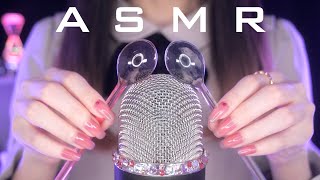
ASMR — autonomous sensory meridian response — is a tingling sensation that some people experience in response to specific soft sounds and visuals such as whispering, tapping, and personal attention. The term was popularised in online communities around 2010.
In a small fMRI study, Lochte et al. (2018) reported activation in the medial prefrontal cortex and nucleus accumbens in participants experiencing ASMR. The sample was ten participants, so the finding is preliminary. ASMR is not a medical treatment.
asmrregistry database
12 ASMR videos indexed
35+ trigger categories
13 use-case intents
What the research shows
Lochte et al. (2018) used fMRI with a small sample (n=10) and reported activation in the medial prefrontal cortex and nucleus accumbens during ASMR. Because the sample is small, the result is best read as preliminary rather than settled.
Poerio et al. (2018) combined survey data with physiological measurement and found that watching ASMR videos was associated with a reduced heart rate and raised skin conductance in people who report ASMR. These are modest autonomic changes, not evidence of any clinical effect.
How to find your triggers
Barratt & Davis (2015) surveyed self-identified ASMR experiencers and catalogued the triggers they report. Whispering, crisp sounds such as tapping, and slow hand movements were among the most commonly reported.
Trying these triggers in a quiet environment, ideally with headphones, is a reasonable starting point. Whether any of them work is individual — many people report no ASMR response at all.
Top videos — 12 found


CELESTIAL WHITE NOISE | Sleep Better, Reduce Stress, Calm Your Mind, Improve Focus | 10 Hour Ambient


Goodbye Stress to Sleep Instantly with Heavy Rain & Thunder on Old Metal Roof in Rainforest at Night
![INSOMNIA RELIEF [Fall Asleep Fast] "The Blue Forest" Binaural Beats Sleep Music](https://i.ytimg.com/vi/FIMdEPd98xs/mqdefault.jpg)




Frequently asked questions
What does ASMR stand for?
ASMR stands for autonomous sensory meridian response — a tingling sensation some people feel in response to soft sounds and visuals. The term was popularised in online communities around 2010.
Does everyone feel ASMR?
No. ASMR is reported by some people and not others, and many people feel nothing in response to common triggers. It is an individual experience.
Has ASMR been studied scientifically?
A small number of peer-reviewed studies exist. Barratt & Davis (2015) surveyed triggers, Poerio et al. (2018) recorded modest autonomic changes (reduced heart rate, raised skin conductance), and Lochte et al. (2018) ran a small fMRI study (n=10). The research base is small and early.