 3h 0m
3h 0m Binaural ASMR
Wear any stereo headphones or earbuds, both in, and look for videos where the creator shows a dummy head or ear-shaped microphone. That is real binaural. Skip speakers and bone conduction headphones, which destroy the effect, and be wary of "binaural" labels on videos that only pan left and right.
What binaural is
Two microphones are placed where human ears would be, usually inside silicone ears on a dummy head. The outer ear shapes incoming sound depending on direction, and your brain learned those patterns to locate sounds. Played through headphones, left goes only to your left ear and right only to your right, so your brain gets the same cues as if you were in the room. The sound seems to come from specific places around your head, not just left or right. Regular stereo just pans.
Equipment you will hear about
- Dummy head with silicone ears: the 3Dio Free Space is the one you will see most. Standardized head geometry makes it the most consistent. A Sennheiser Ambeo or Roland CS-10EM also counts.
- In-ear microphones worn by the creator: record from real ear canals, which can be very convincing but depends on the creator's ear shape.
- Hooke Verse binaural earbuds: record from the wearer's perspective, suiting outdoor ASMR and moving through spaces.
- SR3D: a budget option that beats fake panning.
- Two separate capsules at ear spacing: wide stereo, but no out-of-head 3D feel.
Your headphones
- Earbuds, including AirPods and cheap wired ones: work fine. You need channel separation, not expensive audio.
- Closed-back over-ear: block room noise and keep channels separated, slightly stronger in loud rooms.
- Open-back: still work, though room noise can interfere. More comfortable for long sessions.
- Bone conduction: do not work, because they bypass the ear canal and flatten the spatial cues.
- Speakers: both channels mix in the air, so you get plain stereo at best.
Is it really binaural?
- A dummy head or ear-shaped microphone visible in the video is a good sign.
- In real binaural, tapping near the left ear should feel distinctly to the left and close, and sounds should seem outside your head.
- Ear-to-ear tests it: real binaural travels around the back of your head, while panning jumps from side to side.
- If sounds never go behind you, it is probably stereo with panning.
- Creators who describe a single stereo microphone or widening in editing are simulating it.
- Big channels may be mono or basic stereo, while small creators with proper microphones may deliver more.
Why a real binaural video can feel flat
- The microphone was too far from the sound source.
- Video compression removed the fine high-frequency detail your brain uses for space. Some creators post higher-quality audio elsewhere.
- One earbud is out, or your headphones are on backward, which flips the sound field.
- Blocked or dirty earbuds cut high frequencies, and poor seals leak channels into each other.
- Bluetooth delay can desync sound from lips. Wired avoids it.
Content that benefits most
- Personal attention roleplay: hands and voice move around the head.
- Ear-to-ear whispering: the most cited highlight.
- Tapping around the head: a guided tour of the sound space.
- Nature recordings: birds seem to sit in particular trees at particular distances.
Who it suits
If you have watched ASMR for months and never felt tingles, try one session with proper binaural before deciding. It may also hold attention better for sleep. If you are sound-sensitive or easily overstimulated, it may feel too intense or claustrophobic, so start with gentle whispering. For background use while working, regular stereo is fine.
What the research says
No study is named on this page, and none tested these tips. The advice above is common practice, not tested results.
Best binaural ASMR videos
3h 0m ![[ Back to Sleep ] FALL ASLEEP FAST l Deeply Relaxing Sleep Music - Binaural Beats](https://i.ytimg.com/vi/kvNnzaOPLU0/mqdefault.jpg) 3h 3m
3h 3m [ Back to Sleep ] FALL ASLEEP FAST l Deeply Relaxing Sleep Music - Binaural Beats
 42 min
 =}}(~_~){{=Steamy Dreamy SPAtenious ASMR (binaural)
 1h 11m
 Astral | Deep Theta 4Hz | Binaural Beats Soundscape | Internal Focus, Meditation, Prayer | ASMR
 44 min
 ASMR Binaural Brushing 2.1 - Massage your Brain ** Strong Sounds **
![[ 40Hz ] GAMMA Binaural Beats, Ambient Study Music for Focus and Concentration](https://i.ytimg.com/vi/Z8ANihFXlgU/mqdefault.jpg) 2h 0m
2h 0m [ 40Hz ] GAMMA Binaural Beats, Ambient Study Music for Focus and Concentration
![[ Fall Asleep Immediately ] DEEP SLEEPING Music “Sleepy Falls” Delta Binaural Beats](https://i.ytimg.com/vi/6OgEEQ2N8lc/mqdefault.jpg) 9h 0m
9h 0m [ Fall Asleep Immediately ] DEEP SLEEPING Music “Sleepy Falls” Delta Binaural Beats
![[ADVANCED] The Best Binaural Beats for a Deep Sleep (90-Minute Sleep Cycle)](https://i.ytimg.com/vi/HePF0xlKzNE/mqdefault.jpg) 1h 30m
1h 30m [ADVANCED] The Best Binaural Beats for a Deep Sleep (90-Minute Sleep Cycle)
![INSOMNIA HEALING [peaceful & soothing] Music for DEEP SLEEP - Binaural Beats](https://i.ytimg.com/vi/TBaXvtNxqL0/mqdefault.jpg) 8h 8m
8h 8m INSOMNIA HEALING [peaceful & soothing] Music for DEEP SLEEP - Binaural Beats
 2h 41m
 ASMR 2.5+ Hour Sleep Therapy Ear to Ear Treatment with Binaural Brushing
 4h 0m
4h 0m LET GO of Stress ➤ DEEP Theta Binaural Beats - Sleep Hypnosis, Lucid Dream Music
 39 min
 An Esthetician Visit - Binaural Role Play - ASMR - Face Massage, Water Sounds, Soft Speaking
 3h 5m
3h 5m ASMR Midnight Tingles for Insomniacs 💤 Sleep & Chill to the Best Binaural Triggers for Your Ears
 26 min
 ICONIC ASMR - Fast, Unique & Tingly Triggers
 51 min
 ASMR Binaural (3D) Cranial Nerve Examination Role Play for Tingles, Relaxation, and Sleep
 22 min
 This ASMR Video Will Give You Tingles 100% - #1
 47 min
 ASMR Soviet Interrogation ☭ Cold War Spy Roleplay (Relaxing Binaural Frequencies and Mild Threat)
![DREAM WAVE Sleep Hypnosis [ 4,8Hz Binaural Beats ] Theta Deep Sleep Music ★︎ Lucid Dreams](https://i.ytimg.com/vi/W-MD_XgjYz8/mqdefault.jpg) 9h 9m
9h 9m DREAM WAVE Sleep Hypnosis [ 4,8Hz Binaural Beats ] Theta Deep Sleep Music ★︎ Lucid Dreams
![[v2] 90 Minutes of Focused Studying: The Best Binaural Beats](https://i.ytimg.com/vi/Dq-h8LIe6II/mqdefault.jpg) 1h 30m
1h 30m [v2] 90 Minutes of Focused Studying: The Best Binaural Beats
 2h 0m
2h 0m Super Focus: Flow State Music - Alpha Binaural Beats, Study Music for Focus and Concentration
 8h 0m
8h 0m Healing Sleep Meditation | REM Sleep Music - Binaural Beats Delta Waves 3.4Hz
 43 min
 ASMR Circle Time! 3D Binaural Anticipatory Tingles and Triggers for Relaxation
![THETA to DELTA [ Instantly Fall Asleep ] "Winter Aurora" Binaural Beats Sleep Music](https://i.ytimg.com/vi/RzYIQMYjao4/mqdefault.jpg) 9h 0m
9h 0m THETA to DELTA [ Instantly Fall Asleep ] "Winter Aurora" Binaural Beats Sleep Music
 15 min
 Twin ASMR Ear Cleaning
![SUPER FOCUS [ Flow State Music ] Binaural Beats 40Hz ★ Ambient Study Music to Concentrate](https://i.ytimg.com/vi/n4YghVcjbpw/mqdefault.jpg) 2h 0m
2h 0m SUPER FOCUS [ Flow State Music ] Binaural Beats 40Hz ★ Ambient Study Music to Concentrate
![[ADVANCED] The Best Binaural Beats for a Deep Sleep](https://i.ytimg.com/vi/9TD9SM-5XSk/mqdefault.jpg) 1h 0m
1h 0m [ADVANCED] The Best Binaural Beats for a Deep Sleep
 13 min
 Twin Ear Cleaning - ASMR
![[ Insomnia - Anxiety ] Soothing REM Sleep Music | Deep Sleep Meditation | Binaural Beats](https://i.ytimg.com/vi/OXjBhg-h3go/mqdefault.jpg) 8h 8m
8h 8m [ Insomnia - Anxiety ] Soothing REM Sleep Music | Deep Sleep Meditation | Binaural Beats
 1h 39m
 ASMR 3D TRIGGERS - Binaural VR Mic Test for Tingles & Relaxation
 14 min
 THAT TOOL | Asmr Binaural Sounds With Asmr Back Massage
 8h 0m
8h 0m 텐트안에서 듣는 편안한 빗소리 8시간 | 우중캠핑 ASMR
![Sleep SUPER Smooth [ASMR Triggers] Blissful REM Sleep Music - Binaural Beats 2.0Hz](https://i.ytimg.com/vi/wPhefMiF5Zw/mqdefault.jpg) 8h 0m
8h 0m Sleep SUPER Smooth [ASMR Triggers] Blissful REM Sleep Music - Binaural Beats 2.0Hz
![[ASMR] Walter White Teaches You How to Cook - A Binaural Breaking Bad Role Play](https://i.ytimg.com/vi/Uzd6bm5EcXA/mqdefault.jpg) 15 min
15 min [ASMR] Walter White Teaches You How to Cook - A Binaural Breaking Bad Role Play
![AMAZING SLEEP💤 [Insomnia Healing] "Dance of the Fireflies" Binaural Beats Sleep Music](https://i.ytimg.com/vi/9gpjS3QzsTE/mqdefault.jpg) 9h 9m
9h 9m AMAZING SLEEP💤 [Insomnia Healing] "Dance of the Fireflies" Binaural Beats Sleep Music
 31 min
 ASMR BINAURAL HEAD ATTENTION - New Mic Test. Popular Triggers. Extreme Tingles.
 10h 0m
 NO MORE Insomnia "Celestial Flow" Sleep Music @528Hz ★︎ Binaural Beats Sleep Healing
 1h 22m
 ASMR Binaural Ear Satisfaction - Orbeez Infinity Pool and Other Tingly Trigger Treatments
 20 min
 20-Minute POWER NAP for Energy and Focus: The Best Binaural Beats
 3h 33m
 🎧REM Sleep Music | Deep Sleep Meditation | Pain & Stress Relief | | Binaural Beats
 47 min
 FX Make-up Artist Role Play - Binaural ASMR - Soft Spoken, Face Brushing, Latex Gloves
 23 min
 後頭部のここが滅茶苦茶くすぐったい (立体音響) 無言 / The back of your head tickles. binaural roleplay Notalking【 ASMR 】
 1h 31m
 The NASA Powernap | 90 Mins | Boost Focus & Performance (3D Binaural Brainwaves)
 20 min
 The Best Binaural Beats to WAKE UP! With 589nm orange to stimulate your brain
 31 min
 ≼Binaural Effects for Book sounds Lovers≽
 47 min
 ASMR Binaural Brushing 2 - Massage your Brain ** Gentle Sounds **
 24 min
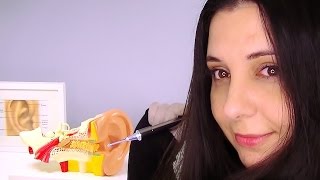
 ASMR Ear Cleaning Role Play: Binaural Audio That Lets You Feel Me In Your Ears!
![[Try Listening for 5 Minutes] DEEP SLEEP MUSIC (2Hz Delta) Binaural Beats Sleep Healing](https://i.ytimg.com/vi/SCWtZihkAE8/mqdefault.jpg) 11h 0m
11h 0m [Try Listening for 5 Minutes] DEEP SLEEP MUSIC (2Hz Delta) Binaural Beats Sleep Healing
![INSOMNIA RELIEF [Relax & Fall Asleep] "Lavender Hill" Binaural Beats Sleep Music](https://i.ytimg.com/vi/cyE7-O3-zb8/mqdefault.jpg) 8h 8m
8h 8m INSOMNIA RELIEF [Relax & Fall Asleep] "Lavender Hill" Binaural Beats Sleep Music
![[v1] 90 Minutes of Focused Studying: The Best Binaural Beats](https://i.ytimg.com/vi/eqKQACO4HAk/mqdefault.jpg) 1h 32m
1h 32m [v1] 90 Minutes of Focused Studying: The Best Binaural Beats
 3h 14m
 ASMR CUTE EARS! The Best Triggers of Everybody's Favorite Binaural Mic. Sleep & Tingles | Ear 2 Ear
![[BEGINNER] The Best Binaural Beats for a Restful Sleep (90-Minute Sleep Cycle)](https://i.ytimg.com/vi/jUpr0aSYu6A/mqdefault.jpg) 1h 30m
1h 30m [BEGINNER] The Best Binaural Beats for a Restful Sleep (90-Minute Sleep Cycle)
 17 min
 Twin Ear Cleaning ASMR Video
![🎧 Relax Music with Binaural Beats [8D AUDIO] Lucid Dreaming, REM Sleep Hypnosis Music](https://i.ytimg.com/vi/lRRF2liwNzc/mqdefault.jpg) 8h 8m
8h 8m 🎧 Relax Music with Binaural Beats [8D AUDIO] Lucid Dreaming, REM Sleep Hypnosis Music
 42 min
 Bedtime Fairy Tales - Binaural ASMR - Soft Spoken/Whisper, Reading, Page Turning, Tapping
![[ASMR] Binaural Joker](https://i.ytimg.com/vi/zGs6gQFdINQ/mqdefault.jpg) 20 min
20 min [ASMR] Binaural Joker
 1h 1m
1h 1m ASMR ALL MIC TRIGGER INCEPTION for Massive Tingles & Deep Relaxation
![INSOMNIA RELIEF [Fall Asleep Fast] "Midnight Aurora" Binaural Beats Sleep Music](https://i.ytimg.com/vi/ohhEjb8-ByQ/mqdefault.jpg) 10h 0m
10h 0m INSOMNIA RELIEF [Fall Asleep Fast] "Midnight Aurora" Binaural Beats Sleep Music
 23 min
 ASMR Circle Time 3: A 360-Degree Binaural Anticipatory Experience
![You Will FALL ASLEEP FAST Sleep Hypnosis Music [ Theta Binaural Beats ] Insomnia Relief](https://i.ytimg.com/vi/P2cLmxDMsjY/mqdefault.jpg) 7h 7m
7h 7m You Will FALL ASLEEP FAST Sleep Hypnosis Music [ Theta Binaural Beats ] Insomnia Relief
![[ Back to Sleep ] Part 2 ★︎ FALL ASLEEP FAST - Deep Sleep Music - Binaural Beats](https://i.ytimg.com/vi/ozoScI6Jhks/mqdefault.jpg) 3h 30m
3h 30m [ Back to Sleep ] Part 2 ★︎ FALL ASLEEP FAST - Deep Sleep Music - Binaural Beats
 1h 0m
1h 0m ⭐Headache & Migraine Relief Frequency / Music⭐| Pain Relief Binaural Beats - VASTU#05
 40 min
 ASMR Binaural Guided and Progressive Relaxation/Meditation for Tingles, Anxiety Relief, and Sleep
 30 min
 30-Minute POWER NAP for Energy and Focus: The Best Binaural Beats
![[ASMR] Video For Strong Tingles💥 HIGHLY UNDERRATED TRIGGERS](https://i.ytimg.com/vi/zs9tL-7rp4k/mqdefault.jpg) 1h 8m
1h 8m [ASMR] Video For Strong Tingles💥 HIGHLY UNDERRATED TRIGGERS
![Hypnotizing Music for DEEP SLEEP [ Delta 1.8Hz Binaural Beats ] INSTANT Insomnia Relief](https://i.ytimg.com/vi/UxGDvWkS-7I/mqdefault.jpg) 9h 0m
9h 0m Hypnotizing Music for DEEP SLEEP [ Delta 1.8Hz Binaural Beats ] INSTANT Insomnia Relief
 9h 0m
9h 0m SLEEP super SMOOTH ➤ Music for DEEP SLEEP “Cherry Grove” + Binaural Beats
![[ Back to Sleep ] Part 4 ☆ FALL ASLEEP FAST - Sleeping Music for Deep Sleep - Binaural Beats](https://i.ytimg.com/vi/prShsCvepQc/mqdefault.jpg) 3h 33m
3h 33m [ Back to Sleep ] Part 4 ☆ FALL ASLEEP FAST - Sleeping Music for Deep Sleep - Binaural Beats
 46 min
 Binaural ASMR Whisper Library Roleplay with book sounds
 8h 0m
8h 0m SUPER SLEEP ✧ 4Hz Delta Brainwaves Δ Healing DEEP Sleep Music + Binaural Beats
 45 min
 100% Orbeez ASMR | Most Requested Trigger Ever
 2h 8m
2h 8m ASMR Music with Binaural Sounds - Calm, Sleep, Relax
![[ASMR] Sleep Like a Baby ~ 3 Hours of Gentle Pampering](https://i.ytimg.com/vi/jMjJlriymBI/mqdefault.jpg) 3h 5m
3h 5m [ASMR] Sleep Like a Baby ~ 3 Hours of Gentle Pampering
![[ Back to Sleep ] Part 3 ✧ FALL ASLEEP FAST - Deep Sleeping Music + Binaural Beats](https://i.ytimg.com/vi/n6xzAbCyGcc/mqdefault.jpg) 3h 33m
3h 33m [ Back to Sleep ] Part 3 ✧ FALL ASLEEP FAST - Deep Sleeping Music + Binaural Beats
![Flow State Music [8D AUDIO] Binaural Theta Waves - Improve Concentration](https://i.ytimg.com/vi/k39oVsZqyDQ/mqdefault.jpg) 1h 30m
1h 30m Flow State Music [8D AUDIO] Binaural Theta Waves - Improve Concentration
![LET GO of Worries [Insomnia - Anxiety] "Moonlight Serenade" Binaural Beats Sleep Music](https://i.ytimg.com/vi/lixp9Lb3KwQ/mqdefault.jpg) 7h 7m
7h 7m LET GO of Worries [Insomnia - Anxiety] "Moonlight Serenade" Binaural Beats Sleep Music
 8h 0m
8h 0m Healing SLEEP Harmony: REM Sleep Music, Inner Peace Meditation - Binaural Beats
![INSOMNIA HEALING [ 7.83Hz Deep Theta ] “Drifting Dunes” Binaural Beats Sleep Music](https://i.ytimg.com/vi/PU4O0PiR6uk/mqdefault.jpg) 8h 8m
8h 8m INSOMNIA HEALING [ 7.83Hz Deep Theta ] “Drifting Dunes” Binaural Beats Sleep Music
![Sleep Healing Music [THETA to DELTA] Fall Asleep Fast ★︎ Stress Relief, Binaural Beats](https://i.ytimg.com/vi/xl36HUJre3I/mqdefault.jpg) 7h 0m
7h 0m Sleep Healing Music [THETA to DELTA] Fall Asleep Fast ★︎ Stress Relief, Binaural Beats
![PERFECT SLEEP “Sleepy Air” Dream Music [ 1.8Hz Delta ] Binaural Beats Sleep Hypnosis](https://i.ytimg.com/vi/S6s_892qwcs/mqdefault.jpg) 9h 9m
9h 9m PERFECT SLEEP “Sleepy Air” Dream Music [ 1.8Hz Delta ] Binaural Beats Sleep Hypnosis
 33 min
 This ASMR Will Make ANYONE Tingle - 10586%
![[ASMR] [ROLEPLAY] dom teacher keeps you at her house (binaural/check description)](https://i.ytimg.com/vi/laU_UcPN2ok/mqdefault.jpg) 44 min
44 min [ASMR] [ROLEPLAY] dom teacher keeps you at her house (binaural/check description)
 35 min
 35-Minute POWER NAP for Energy and Focus: The Best Binaural Beats
![[ASMR RP] Movie Night At Your Crush's House 🎬](https://i.ytimg.com/vi/pVVYvLlVcNk/mqdefault.jpg) 1h 1m
1h 1m [ASMR RP] Movie Night At Your Crush's House 🎬
![ASMR INSIDE YOU - Deep Triggers to Fix Your Sleep Tonight 👂 Ear Cleaning & More [Binaural - 4K]](https://i.ytimg.com/vi/fNaznfnBFPo/mqdefault.jpg) 3h 13m
3h 13m ASMR INSIDE YOU - Deep Triggers to Fix Your Sleep Tonight 👂 Ear Cleaning & More [Binaural - 4K]
 14 min
 Twins Ear Cleaning - ASMR
 40 min
 ASMR | FRANK'S INNER VOICE | Confessions of a Binaural Microphone
 3h 33m
 ASMR Music 🎧 Hypnotizing Triggers | Binaural Beats Sleep Trance (NO TALKING)
 16 min
 Twin Ear Cleaning ASMR Video For People Who Hear Yanny
 25 min
 ASMR Full Ear Cleaning Video - Outer & Inner Cleaning
 8h 0m
8h 0m Testosterone Frequency Music | Binaural & Isochronic Tones Associated With Testosterone Release #13
 10h 0m
 SLEEPY SPECIAL 💎 Binaural Beats 7.83Hz THETA Sleep Music “Hidden Gems #2”
![GOOD NIGHT Sleep Music [Peaceful Dreamy Sounds] “Sleepy Valley” Binaural Beats](https://i.ytimg.com/vi/eoPxBAoc15s/mqdefault.jpg) 10h 0m
10h 0m GOOD NIGHT Sleep Music [Peaceful Dreamy Sounds] “Sleepy Valley” Binaural Beats
 22 min
 ASMR - Binaural Smoke Blowing with MONQ Aromatherapy Diffusers
 4h 20m
 40 Hz Study Music - GAMMA Binaural Beats, Brainwave Music for Focus and Concentration
 10h 0m
 SLEEPY SPECIAL 💎 Binaural Beats THETA to DELTA Deep Sleep Music “Hidden Gems #4”
 50 min
 ASMR Tingle Battle – TASCAM vs ZOOM Kawaii Trigger Tournament
 8h 0m
8h 0m Fall into DEEP SLEEP: Relax Music with Binaural Beats for Sleep, Meditation, Anxiety Relief
 1h 58m
 🔴【ASMR】Ear Cleaning, Ear Blowing, Triggers For Sleep【Binaural/japanese asmr】
 25 min
 A Very Tingly ASMR Ear Cleaning
 24 min
 ◐ Binaural Ear Cleaning & Massage ASMR ◑
Related triggers
Use binaural ASMR for
Where to buy
| Item | Why it fits | ||
|---|---|---|---|
| Wired over-ear headphones | Wired two-channel sound for binaural recordings, no Bluetooth lag. | See on Amazon | |
| Closed-back headphones | Closed cups keep sound in and block some room noise. | See on Amazon |
As an Amazon Associate, ASMR Registry earns from qualifying purchases. Links open Amazon search results. We have not tested these products.
Frequently asked questions
What does binaural mean in ASMR?
It means recorded with two microphones placed where human ears would be, usually inside silicone ears on a dummy head. Through headphones, your brain reads the small differences between left and right as three-dimensional space, so sounds seem to come from places around your head.
Do you need headphones for binaural ASMR?
Yes, headphones or earbuds, because each ear needs its own channel. Speakers mix the channels in the air and destroy the spatial cues. Any stereo headphones work. Bone conduction headphones do not.
What is the difference between binaural and regular ASMR?
Regular ASMR is usually mono or stereo, where sounds sit on a flat left-right line. Binaural uses ear-shaped microphones, so you hear sounds behind you, above you and at distances. It feels like someone is in the room moving around you.
Why does binaural ASMR feel 3D?
The shape of your outer ear changes sound depending on direction, and your brain uses that to locate sounds. Binaural microphones have silicone ears that recreate it, so headphones deliver the same cues you get in real life.
What microphone do ASMRtists use for binaural recording?
The 3Dio Free Space is the one you will see most, with silicone ears and a microphone in each. Other options are Hooke Verse binaural earbuds and the budget SR3D. The ear shape matters because it creates the filtering your brain uses.
Does binaural ASMR work with earbuds or only over-ear headphones?
Earbuds work fine. The effect depends on channel separation, not headphone type or price. Over-ear headphones may isolate better in noisy rooms. Bone conduction is the exception.
- Wear both earbuds, because playing through one defeats binaural completely by sending only one channel to your ears.
- Check the left and right markings if spatial directions seem reversed, since backward headphones flip the sound field.
- Look for a visible dummy head or ear-shaped microphone in the video, since that confirms real binaural recording.
- Test with an ear-to-ear video, where real binaural travels around the back of your head instead of jumping between sides.
- Use wired headphones if Bluetooth delay desyncs the sound from the lips on screen, because that mismatch breaks the immersion you are trying to build.