 0 min
0 min ASMR Whispering
Pick whispering if you want a voice close to your ear that asks nothing of you. It suits people who like quiet speech for sleep, calming down or background company. Skip it if breath and mouth sounds make you tense; tapping or crinkling is a safer start.
Pick the style that fits
- Close-up whispering: the creator speaks near the microphone, so breath and soft consonants are clear. This is the default style many people mean.
- Inaudible whispering: the words cannot be made out, only breath and rhythm. Pick it if following the words pulls you out of the tingle.
- Binaural whispering: recorded so the voice seems to move around your head. Pick it if you have headphones and want a more lifelike effect.
- Ear-to-ear whispering: the voice swaps between left and right ears. Some people find it the strongest style; others find it unbearable, and for sleep it can keep you alert.
- Soft-spoken: quiet normal speech with a warmer, chattier feel. Pick it if pure whisper feels grating.
What to try first
Put headphones in, turn the screen away and start with a close-up whisper from a creator who stays slow and even. Gentle Whispering ASMR (Maria), WhispersRed (Emma) and ASMR Glow are three well-known names with large back catalogs.
WhispersRed leans almost entirely on true whisper and an unhurried pace, which many sleepers like. ASMR Glow mixes soft-spoken and whispered passages in personal attention roleplay, a gentle entry point if you are new.
Match the style to your goal
- Sleep: choose long, low-story videos with a steady tone, such as repetitive affirmations or inaudible sections. Avoid sudden volume changes, and avoid ear-to-ear if it keeps you alert.
- Anxiety: try personal attention roleplay with soft whispering, such as a spa visit or check-in. The simple story gives a busy mind somewhere to rest.
- Focus: pick background whispering, such as a quiet reading or page-turning video, so the voice feels like company rather than something to follow.
If it is not working
- Words getting in the way? Try a creator whispering in a language you do not speak, or switch to inaudible whispering.
- No tingles? Pair the whisper with a soft repeated task such as brushing or page turning.
- Going numb to it after nightly use? Take a few nights off.
- Whisper makes you irritated or tense? That can be a misophonia-type reaction to mouth and breath sounds. Try tapping, crinkling or water sounds instead.
Volume and setup
Play it quieter than you think you need. Having to listen slightly can pull your attention away from racing thoughts.
Check the video description for the word binaural. Creators who label their technique are usually more deliberate about it. Queue a playlist for sleep so you do not have to pick the next video.
What the research says
Poerio and colleagues (2018, PLOS ONE) measured people watching ASMR videos and reported lower heart rate and higher skin response in those who experience ASMR, compared with control videos. Barratt and Davis (2015, Frontiers in Psychology) surveyed ASMR viewers and found whispering was among the triggers they reported most. Researchers do not yet have a full explanation for why it works.
No study has tested the style-by-goal advice above specifically; it is common practice, not tested results.
Best whispering ASMR videos
0 min  0 min
0 min 1 or 2? #asmr #asmrsounds #asmrrelax #asmrtingles #asmrwhispers #asmrsleep #relax #tingles #whispers
 0 min
0 min ESTOS SON LOS HELADOS DE MADERA 🍦#asmr #shorts #asmrsounds #comedia
 0 min
0 min LIMPIO TU HERIDA ENFERMERO DE TU COLEGIO #asmr #shorts #asmrsounds #comedia
 54 min
 ASMR Close Inaudible Whispering with Ear Triggers😌👂 (Slow, Relaxing, Massage, 4K)
 1 min
1 min TE COMO 😳 #asmr #shorts #asmrsounds #comedia
 36 min
 Aubrey Plaza Explores #ASMR | W Magazine
 0 min
0 min Zendaya ASMR whisper & soft spoken
 34 min
 Fluffy Sleepy Whispers ASMR
 37 min
 Esperanza's ASMR whisper massage, hair play & limpia/energy cleansing for sleep & relaxation 💆🏻♀️
 10 min
 Rosalía Explores #ASMR | W Magazine
 1h 12m
 ASMR 6 types of Ear Cleaning Sounds / Whispering
 34 min
 (•^.^•) Face Mapping for your Napping (•^.^•) ASMR Role Play
 38 min
 Whisper ASMR | scalp, face, and shoulder massage
![[ASMR] You Are an iPad](https://i.ytimg.com/vi/XavK79aySvg/mqdefault.jpg) 28 min
28 min [ASMR] You Are an iPad
 1 min
1 min ASMR EN ESPAÑOL Parte 2 | Aplicando tu maquillaje With subtitles! 💄 #shorts #español #asmr
![ASMR ULTIMATE EAR TREATMENT by Doc Zzz | Examining and Cleaning Your Ears [Whispering + No Talking]](https://i.ytimg.com/vi/pkXdsn-gw_E/mqdefault.jpg) 3h 12m
3h 12m ASMR ULTIMATE EAR TREATMENT by Doc Zzz | Examining and Cleaning Your Ears [Whispering + No Talking]
 49 min
 ASMR (50 MIN) DEEP, CRISP EAR WHISPERING ~ FAVORITE TRIGGER WORDS 💕
 19 min
 ASMR Ear to Ear Whispering + Intense Mouth Sounds
 0 min
0 min ASMR Cleaning Your Ears w/ semi Inaudible Whisper Part 3 #asmr #asmrshorts #youtubeshorts #shorts
 25 min
 Best of ASMR: Margot Robbie, Gal Gadot and More Explore ASMR with Whispers and Sounds | W Magazine
 11 min
 ASMR PICKLE CHALLENGE (ASMR Phan) Whispering | CRUNCHY EATING SOUNDS | Zach Choi ASMR
 28 min
 ASMR | Deep Ear Attention / Close Whispers; Intense Scratching Massage
 13 min
 Bad Bunny Explores #ASMR | W Magazine
 16 min
 ASMR Helping You Fall Asleep In Bed Friend Roleplay
 41 min
 Esperanza's soft whispering ASMR massage, hair play & energy cleansing for sleep & relaxation 🥰
 2h 7m
2h 7m ASMR|2 HOURS OF INAUDIBLE/SEMI INAUDIBLE WHISPERING (WITH PERSONAL ATTENTION)
 3h 0m
3h 0m ASMR 💓 БЛИЗКИЙ ШЕПОТ для СНА 😴 3 часа АСМР | Close-Up Whispers
 0 min
0 min ASMR eye cleaning #asmr #asmrsounds #asmrrelax #asmrtingles #asmrsleep #relax #tingles #whispers
 27 min
 Bob Ross - Whispering Stream (Season 6 Episode 4)
 8 min
8 min Paris Hilton Explores ASMR | W Magazine
 27 min
 ASMR Mastercrafted Inaudible Whispering to Help Sleep
 59 min
 ASMR Whispering YOUR Favorite Trigger Words In 35 Different languages 🌍
 1h 9m
1h 9m ASMR for Instant Sleep | Unique Triggers & Deep Inner Ear Sounds
 1 min
1 min You can't predict my next move #asmr #asmrsounds #asmrrelax #asmrsleep #relax #tingles #whispers
 31 min
 ASMR | Very Close Up Whispering & Telling You Stories
 12 min
 ASMR HAIR CUT snip snip tingle tingle (fast paced)
![[ASMR] Whispers in Different Languages | Spanish, Japanese, German, French](https://i.ytimg.com/vi/Wrz70hfclpA/mqdefault.jpg) 15 min
15 min [ASMR] Whispers in Different Languages | Spanish, Japanese, German, French
 1 min
1 min ASMR Cleaning Your Ears w/ semi Inaudible Whisper #asmr #asmrshorts #youtubeshorts #shorts #short
 23 min
 Nina Dobrev Explores ASMR | W Magazine
 30 min
 ASMR | Colour Your World
 2h 0m
2h 0m ASMR 2 Hours of Layered Inaudible Whispers | Ear Cupping | Mic Brushing| Rubber Gloves |Kisses
 25 min
 ASMR| CLOSE UP- Doing Your Eyebrows W/ Inaudible Whispering/ Personal Attention
 23 min
 Emma Chamberlain Explores ASMR | W Magazine
 39 min
 ○ Whispers ○ Crinkles ○ Hair Brushing ○ Bubbles ○ ASMR ○
 41 min
 ASMR Brain Penetrating Unpredictable Invisible Triggers / Mic Pulling (Whispering, Random Triggers)
 24 min
 Doña Esperanza's ASMR whispering massage treatment for sleep and relaxation 😌
 57 min
 ASMR Different Languages Whispering (Russian, German, Portuguese, Spanish, Arabic, Japanese...
![(ENG SUB)[Japanese ASMR] 1 Hour ASMR Sounds for Sleep & Relaxation / Whisper](https://i.ytimg.com/vi/gYq6HP--ttc/mqdefault.jpg) 1h 3m
1h 3m (ENG SUB)[Japanese ASMR] 1 Hour ASMR Sounds for Sleep & Relaxation / Whisper
 1 min
1 min Emoji challenge #asmr #asmrsounds #asmrrelax #asmrtingles #asmrsleep #relax #tingles #whispers
 37 min
 ASMR little boxes
 14 min
 Gigi Hadid Explores ASMR | W Magazine
![[ASMR] 日本語オノマトペを耳元で囁く#1 Japanese Trigger Words, Ear to Ear Whispering, Hand Movement](https://i.ytimg.com/vi/IfKa-HXzB5w/mqdefault.jpg) 1h 3m
1h 3m [ASMR] 日本語オノマトペを耳元で囁く#1 Japanese Trigger Words, Ear to Ear Whispering, Hand Movement
![[ASMR] 7th Anniversary🎉$10,000 Mic Sounds🗿🎤Japanese Whispering / ASMR Triggers [KU100]](https://i.ytimg.com/vi/AHdMLy_3hBs/mqdefault.jpg) 1h 49m
1h 49m [ASMR] 7th Anniversary🎉$10,000 Mic Sounds🗿🎤Japanese Whispering / ASMR Triggers [KU100]
 40 min
 Trippy ASMR 🍃 - 8d, insane visuals, delay, whispering, ambience shifts
![[Japanese ASMR] 10 ASMR Triggers For Sleep & Relaxing / DR-40 / Whispering](https://i.ytimg.com/vi/-GKezGzRvjg/mqdefault.jpg) 1h 8m
1h 8m [Japanese ASMR] 10 ASMR Triggers For Sleep & Relaxing / DR-40 / Whispering
 3h 45m
 3 HOURS ASMR for Those Who Want to Sleep Soundly Now / closeup whispers 3Hr
 5 min
5 min Kate Hudson Explores ASMR With Whispers and Scissors | W Magazine
 20 min
 ASMR Intense Relaxation for Sleep and Tingles (Close Whisper)
 34 min
 Gentlemen's Jacket Fitting 🤵 ASMR Whisper • Lint Roller • Measuring • Leather
 32 min
 ASMR Hair, Makeup & Whispers ♥ Greek Goddess GLAM | Sleepy Spa Pamper Sesh: Payton, Corrina & Hailey
 43 min
 Back to Sleep Softly Whispered 💜 ASMR
 3h 2m
3h 2m ASMR for Sleepless Nights 🌙 Gentle Triggers and Quiet Whispers for a Good Night's Sleep | Ear 2 Ear
 25 min
 ASMR hand sounds and whispers
 3h 10m
 Bible Reading ASMR - Whispering the Entire Gospel of Luke ✝️
 11 min
 Victoria Pedretti Explores #ASMR | W Magazine
 0 min
0 min “Slow Vacuum Glide 8K 🎥 | Satisfying Air Flow & Whisper ASMR”
 29 min
 ASMR FOR THE BOYS
 33 min
 DEEP, IN-YOUR-EAR WHISPERS | ASMR (Articulated & Breathy)
 55 min
 Meticulous Skin Analysis 。◕‿◕。 ASMR Whisper Ear-to-Ear
 36 min
 ASMR - Annual Physical Exam with Dr. Hastings
![[ASMR] For The Best Sleep EVER 😇💙](https://i.ytimg.com/vi/YDPBzWrda18/mqdefault.jpg) 55 min
55 min [ASMR] For The Best Sleep EVER 😇💙
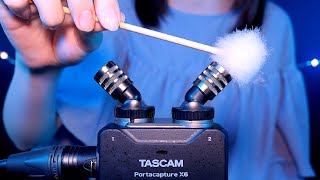 30 min
 ASMR Japanese Trigger Words Whispering, Ear Cleaning & Ear Blowing / TASCAM Portacapture X6
 3h 3m
3h 3m slow ASMR | 3 hours "Relax, it's okay" comfy Sounds & Whispering for Sleep
 39 min
 ASMR 오랜만에 소곤소곤 속삭이는 수다😉 Talking, Whispering, Soft spoken
![[ASMR] Ear Touching & Close Up Ear to Ear Whispering](https://i.ytimg.com/vi/XcCtVaAhhUc/mqdefault.jpg) 22 min
22 min [ASMR] Ear Touching & Close Up Ear to Ear Whispering
 17 min
 ASMR ⛓- Totally captivated -⛓ Unsanctioned pleasures while you locked up 🔗
 12 min
 ASMR helping you cheat on a test 🙊 inaudible whispering + gum chewing
 15 min
 ASMR Close Whisper Guided Sleep / Muscle Relaxation (with countdown)
![[ASMR] Sleep Hypnosis | Layered Visuals & Audio 🌀](https://i.ytimg.com/vi/Cc6vYlHg7Zk/mqdefault.jpg) 1h 1m
1h 1m [ASMR] Sleep Hypnosis | Layered Visuals & Audio 🌀
 48 min
 ASMR for Anxiety ⛈ Calming Whispers & Guided Visualization for Sleep (Rain & Music Sounds)
 31 min
 SLOW & GENTLE ASMR ✨🧸
 49 min
 GERMAN ASMR for Insomniacs & Tingle Lovers | Top Triggers and Whispering for Sleep
 46 min
 ASMR SODA TINGLES, SLUSHY BATH & STEAMY WHISPERS | Unique. Relaxing. Satisfying.
![[Remastered version] ASMR Triggers For Relaxation / Japanese Whispering / SR3D / mic test](https://i.ytimg.com/vi/ylaZRaH5V5s/mqdefault.jpg) 41 min
41 min [Remastered version] ASMR Triggers For Relaxation / Japanese Whispering / SR3D / mic test
 38 min
 DEEP Ear Whispers • ASMR • Inaudible • Breathy • No Mouth Sounds (almost)
 19 min
 ASMR That should have been your head 🎙️
 18 min
 Troye Sivan Explores ASMR | W Magazine
 23 min
 Amandla Stenberg Explores #ASMR | W Magazine
 30 min
 ASMR TRIGGERS FOR SLEEP 👀😴 / АСМР ТРИГГЕРЫ ДЛЯ СНА
 25 min
 Reiki Energy Healing Role Play *ASMR*
 26 min
 ASMR - Inaudible/Unintelligible Up-Close Breathy Whispering
 20 min
 AMAZING ASMR 😋
 53 min
 Nailpolish Cataloging ASMR 💅 Page Flipping • Unintelligible Whispers • Listen While Study • Ambient
 1h 34m
 20 ASMR Triggers For Sleep & Relaxing 😴 Japanese Whispering
 57 min
 Only For Your Sleep🌙 ASMR helping you sleep well tonight
 14 min
 ASMR What's my angle? 🤔 Just to please🤗
 50 min
 Unintelligible Whispers Collection (+ new scene) | ASMR compilation from the roleplays
 1h 7m
1h 7m SLEEPY Make Over 💤 ASMR 💤 Whisper Ear-to-Ear, Color Analysis, Fabrics, Make up
 39 min
 ASMR iconic duo
Related triggers
Use whispering ASMR for
Where to buy
| Item | Why it fits | ||
|---|---|---|---|
| Wired over-ear headphones | Wired two-channel sound for binaural recordings, no Bluetooth lag. | See on Amazon | |
| Headband sleep headphones | Flat speakers in a soft headband, made for wearing in bed. | See on Amazon |
As an Amazon Associate, ASMR Registry earns from qualifying purchases. Links open Amazon search results. We have not tested these products.
Frequently asked questions
What is ASMR whispering?
It is a quiet, breathy way of speaking recorded close to a microphone. Fans use it to relax, wind down for sleep or get tingles. Styles range from true whisper to soft-spoken.
Why does whispering trigger ASMR?
Researchers do not have a full answer. One idea is that a quiet, close voice feels like safe, gentle company. Poerio and colleagues (2018, PLOS ONE) found lower heart rate in ASMR viewers watching ASMR videos, but that does not explain the cause.
Does ASMR whispering actually help with sleep?
Many people use it that way. Long, low-story videos with an even tone tend to suit sleep better than ones with changing volume or a plot. If ear-to-ear whispering keeps you alert, switch to close-up or inaudible whispering. Results are personal.
What is the difference between whispering and soft-spoken ASMR?
A true whisper is breath and mouth shapes with no voice tone. Soft-spoken is quiet normal speech with a warmer feel. Many creators blend both, so try each and keep what feels better.
What is inaudible whispering in ASMR?
It is whispering so quiet that words cannot be made out, leaving only breath and the rhythm of speech. It helps people who lose the tingle by following words.
What is ear-to-ear ASMR whispering?
The creator alternates between your left and right ear in a binaural recording. You need headphones for it to work. Some people find it very intense; others find it hard to sleep to or too much.
Who are the best ASMR whispering creators?
There is no single best. Gentle Whispering ASMR (Maria) is known for ear-to-ear personal attention, WhispersRed (Emma) for unhurried true whisper, and ASMR Glow for blended soft-spoken roleplay. Try one of each and see which voice you like.
Is ASMR whispering sexual?
No. Whispering is not inherently sexual and most ASMR content has no sexual element. Barratt and Davis (2015, Frontiers in Psychology) reported that participants in their survey described ASMR as calming rather than arousing.
- Use headphones for any video labeled binaural or ear-to-ear, because the effect depends on separate left and right audio reaching each ear.
- If understandable words reduce your tingle, try a creator whispering in a language you do not speak so the sound stays purely acoustic.
- For sleep, choose a long close-up or inaudible whisper with an even tone and no story arc, and avoid ear-to-ear if it keeps you alert.
- If whispering irritates you instead of relaxing you, switch to tapping or crinkling, which avoid the mouth and breath sounds that bother some people.
- Queue a playlist before bed so you do not have to pick another video and wake yourself up with the screen.
- Turn the screen away or dim it fully before you start, because watching adds visual stimulation that works against the calm the audio is trying to build.
- Keep the volume low enough that you need to listen slightly, since that small effort can pull attention away from busy thoughts.