 36 min
 Folding ASMR
Pick a no-talking laundry folding video if you want company while you fold, and a soft-spoken or longer one if you want to wind down in bed. Choose slow folders with close microphones and no background music. Skip it if soft fabric rustling irritates you, or if you get bored without changing sounds and visuals.
Pick a type
- Laundry folding: shirts, jeans, towels and sheets. The most popular, and best for pairing with a chore because the rhythm matches your hands.
- Paper and origami: sharper, with crisp creases and defined snaps, and a stop-and-start rhythm. Pick it if fabric sounds feel too soft or muffled.
- Fabric and textile folding: bolts of cloth, napkins and blankets, with more variety in material. Pick it for something close to laundry but different.
Cotton, towels and linen sound different. Towels are thicker and more muffled. If origami never worked, try cotton or linen before giving up.
Talking or not
- No talking: pure ambient sound. Best while you fold, because the rhythm keeps going and nothing makes you pause to listen.
- Whispered or soft-spoken: adds human presence, sometimes with a folding method explained. Best in bed, as the voice gives your mind something to follow while you drift off.
Spot a good video quickly
- Microphone close to the action: distant or echoey audio loses the texture.
- Slow, deliberate pace: speed-folding makes the audio chaotic.
- Fabric choice: wrinkled cotton has more crinkle, smooth jersey or fleece is almost silent.
- Quiet environment: skip hum, traffic or voices in the background.
- No music, which competes with the folding sounds.
Why it works when others do not
Folding is a steady, predictable rhythm of pick up, fold, place down. When the pattern is consistent, your attention can relax. There is no intimacy, no eye contact and no caring persona, so it suits people who do not respond to voice-heavy ASMR. The sight of hands smoothing fabric can add to the effect, so it often works better on video than as audio only. This is an idea, not something proven.
Set up while you fold
- Prop the phone where it is in your peripheral vision, such as against the laundry basket.
- Use a small speaker, not headphones, so you can move freely.
- Choose a video longer than the task, so it does not run out mid-fold.
- Start it when you are ready to fold, not while gathering laundry.
- Keep the volume low to moderate.
Then wind down for sleep
- Switch to a long compilation. Search folding ASMR sleep.
- Switch to headphones if you have them, since binaural folding seems to move around you.
- Dim the screen or use audio only.
- If pure folding gets thin, try videos layered with rain or soft music.
If it did not work
- Switch fabric type.
- Try a different creator's pacing, slower or steadier.
- Add or remove voice.
- Try at least three videos before deciding. If you are easily bored, try shorter folding clips or compilations that mix in other triggers.
What the research says
No study has tested folding ASMR; the advice above is common practice, not tested results.
Best folding ASMR videos
36 min  25 min
 ~•/•/•~Relaxing Napkins Folding Tutorial~•/•/•~
 17 min
 ♦-♦-♦Origami show-n-tell "The Book"♦-♦-♦ ASMR
![[囁き声-ASMR] 折り紙、紙の音 / Paper Sounds, Origami, Crinkling, Whispering](https://i.ytimg.com/vi/hGUrTMS6B_o/mqdefault.jpg) 42 min
42 min [囁き声-ASMR] 折り紙、紙の音 / Paper Sounds, Origami, Crinkling, Whispering
 13 min
 ♦-♦-♦Origami show-n-tell "The Collection"♦-♦-♦ ASMR
 42 min
 Origami and Soft Speaking for Sleep (ASMR)
 37 min
 Letter Folding | ASMR Cozy Basics (tutorial, paper sounds, wax sealing, soft spoken)
 24 min
 Every Fold Holds a Memory 🧦 Laundry Sounds & Gentle Words
 47 min
 ASMR | Thrift Store Purchase | Folding Clothes (Soft Spoken)
 3h 52m
 ASMR - Ear Cleaning, Picking, Folding, Palpating, ETC and Other Triggers Compilation - Soft Spoken
 22 min
 Crinkly Folding the Origami of Professor (ASMR Money Heist)
 46 min
 ASMR Thrift Store | Folding Clothes / Bag Crinkles (Soft Spoken & Whisper)
 35 min
 Crinkly Folding an Origami PIG 🐷ASMR No Talking
 33 min
 Vinnys Gonna Do Some Origami ASMR (Paper Folding Sounds)
 1h 1m
1h 1m Paper folding, NOT pretty Origami, ASMR, no talking
 28 min
 Unbelievable! I Ate Canned Sardines Made of Origami Paper?! | Surprising Taste Test ASMR Experiment!
 14 min
 ASMR SPICY RICE CAKES TTEOKBOKKI FOLDING GIMBAP 가래떡 떡볶이, 접어먹는 김밥 먹방 MUKBANG ZOEY ASMR
 17 min
 ASMR - Origami Question Box Tutorial - Close Up Breathy Whispers
 31 min
 ASMR - Checking & Folding Clothing - Minimal Talking
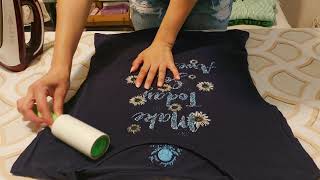 37 min
 ASMR /👚 Ironing & folding clothes👔 / lint roller.👕
 47 min
 ASMR | My Sock Collection Show & Tell w/Folding (Whisper)
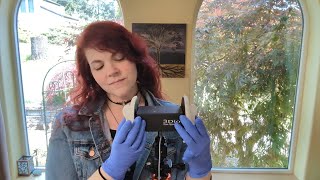 30 min
 ASMR - Ear Examination Roleplay - Folding and Palpating with Gloves - Soft Spoken
 1h 5m
1h 5m ASMR | Unfolding/Folding Lens Cleaning Cloth (Whisper)
 54 min
 ASMR Towel Folding Lint Rolling Relaxing Fabric Sounds ASMR Folding Sounds Soft Close ASMR Whisper
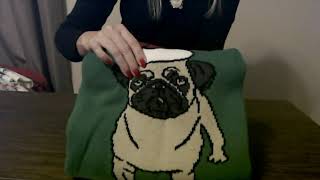 43 min
 ASMR | Folding Christmas Sweaters (Whisper)
 31 min
 Laundry Folding, ASMR-style (fabric sounds, no talking)
 21 min
 ASMR Whispered Storytime | Babysitting Nightmare
 25 min
 Relaxing Clothes Folding ASMR 💜💤 (soft spoken)
 29 min
 ASMR Folding towels and t-shirts and talking softly - fabric sounds
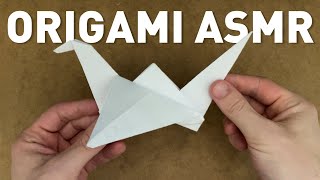 26 min
 Origami (ASMR)
 57 min
 ASMR Clothes Folding Lint Rolling Relaxing Fabric Sounds ASMR Folding Sounds Soft Close ASMR Whisper
 31 min
 ASMR | Clothes Tingles for Deed’s 🛌 Folding Clothes 👗 Lint Roller 🩳 Fabric Sound 👚
 47 min
 Asmr ~ Lint Rolling ~ Folding Clothes~ Relax 👗 unwind ~ fabrics sounds 🌸
 51 min
 ASMR Folding Linens! (No talking version) Cloth sounds & jingly bracelet~Looped 1X for length.
 22 min
 ASMR / FOLDING MY WINTER CLOTHES / FABRIC SOUND / LINT ROLLER💜
![[ASMR] Relaxing Towel & Clothes Folding (Soft Spoken)](https://i.ytimg.com/vi/hclGTYsoa-g/mqdefault.jpg) 34 min
34 min [ASMR] Relaxing Towel & Clothes Folding (Soft Spoken)
 28 min
 ASMR * Folding laundry * Very soft sounds * Fabric rustling * Lint rolling (No Talking)
 30 min
 Folding Laundry ASMR 🧺 soft whispers 🎧 fabric sounds 👚
 33 min
 ASMR Personal Shopper/Stylist Roleplay | Fabric Sounds, Folding and Hanging Clothes ✨🌙🌞
 39 min
 ASMR Whispered Lint Rolling Clothes with Adjustments, Neatening, Folding & Sticky Fabric Sounds
 20 min
 ASMR Relaxing Folding Clothing & Haul/No Talking, Relaxing Nails Scratching Fabric & Bracelets
 25 min
 ASMR Folding Linens! (Whispered version) Cloth sounds & tinkling bracelet
 1 min
1 min folding clothes #asmr #asmrsounds #tingles #relaxing
 25 min
 ASMR WÄSCHE ZUSAMMENLEGEN 👚👕👖(FOLDING CLOTHES) | FABRIC SOUNDS | GEFLÜSTERT
 18 min
 Asmr- Gently Folding Clothes - Scratching fabric sounds
 19 min
 ASMR - Doing Laundry and Folding Clothes - Some Soft Speaking
 22 min
 ASMR folding clothes (minimal talking)
 20 min
 ASMR Origami (Paper Sounds)
Related triggers
Use folding ASMR for
Where to buy
| Item | Why it fits | ||
|---|---|---|---|
| Wired over-ear headphones | Wired two-channel sound for binaural recordings, no Bluetooth lag. | See on Amazon | |
| Headband sleep headphones | Flat speakers in a soft headband, made for wearing in bed. | See on Amazon | |
| Small Bluetooth speakers for the nightstand | Plays sound into the room, so nothing presses on your ears. | See on Amazon |
As an Amazon Associate, ASMR Registry earns from qualifying purchases. Links open Amazon search results. We have not tested these products.
Frequently asked questions
What is folding ASMR and why is it so satisfying?
It is video of someone slowly folding clothes, towels, paper or fabric while a microphone picks up the soft sounds. The appeal seems to be the predictable rhythm of fold, smooth, place, which lets your attention relax.
Who are the best ASMR creators for laundry folding videos?
There is no verified best list. Look for close microphone placement, slow movements, quiet recording and creators who treat folding as the main content. Search laundry folding ASMR, sort by popularity and check the first part of a video for pace and audio.
What makes fabric folding sounds different from paper folding in ASMR?
Fabric is softer and more muffled, while paper is sharper with defined creases. Cotton and linen have subtle texture and paper has decisive snaps. If fabric sounds too muddy, try paper; if paper is harsh, try fabric.
Should I watch folding ASMR with or without talking?
It depends on what you are doing. No talking suits folding laundry yourself, because it keeps your rhythm. Soft-spoken suits lying in bed, because the voice gives your mind something to follow.
How long should a folding ASMR video be for sleep?
Choose a long video so it does not end while you are awake, and consider a compilation. If pairing with real laundry, pick a video longer than the task.
Why does folding ASMR work when other triggers do not?
Possibly because it has predictable rhythm, neutral content and familiar sounds, with no intimacy to feel awkward about. The consistent pattern lets your mind stop monitoring for changes. This is an idea, not proven.
- Pick a video longer than your laundry task, because running out mid-fold breaks your rhythm and pulls you to your phone.
- Use a small speaker while folding so you can move around, then switch to headphones in bed for a more immersive sound.
- Skip videos with background music, noisy rooms or fast folding, because anything competing with slow deliberate sounds defeats the purpose.
- Try a different fabric before giving up, since towels, cotton and linen all give different sounds.
- Start the video only when you are ready to fold, so you do not use up the calm part while still gathering laundry.