Mukbang ASMR
Mukbang ASMR is eating sounds recorded with high-quality microphones, designed to trigger that spine-tingling brain response through the crunch, slurp, and chew of food. If regular whispering ASMR stopped working for you and you accidentally discovered that watching someone demolish a plate of fried chicken with a $400 mic makes your whole body relax, you found your thing.
Key Takeaways
- The best mukbang ASMR uses binaural microphones placed 6-12 inches from the food, not the mouth, creating spatial depth that triggers stronger responses
- Honeycomb, Korean fried chicken, rice cakes, and raw seafood dominate because they combine hard exterior crunch with soft interior moisture in rapid sequence
- No-talking mukbang ASMR is a distinct subgenre from social mukbang. If you want pure eating sounds, search "no talking mukbang ASMR" specifically
- YouTube preserves audio quality better than TikTok. The same creator sounds completely different on each platform due to compression
- If wet mouth sounds trigger disgust instead of relaxation, you may have misophonia overlap. Try creators who mic the plate, not their face
What Makes Mukbang ASMR Different From Regular Mukbang
Regular mukbang started in South Korea as a social eating broadcast. Someone eats a massive amount of food while chatting with viewers. The point is companionship. ASMR mukbang flips the priority: the eating sounds are the main event, and the social element is optional or removed entirely.
The recording setup is completely different. A regular mukbang creator uses a standard camera mic or lapel. An ASMR mukbang creator uses directional condenser microphones or binaural setups positioned to capture every texture change in the food. the difference is noticeable almost immediately. If the chewing sounds hollow and distant, it is regular mukbang. If the crunch fills your entire head and you can almost feel the texture, it is ASMR mukbang.
This matters because searching "mukbang" alone will give you a mix of both. You will waste twenty minutes clicking through chatty eating streams when what you actually want is someone silently working through a seafood boil with $300 worth of recording equipment pointed at the plate.
Why Certain Foods Dominate This Genre
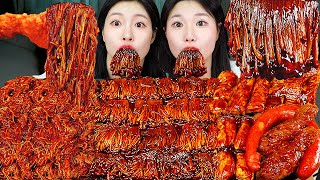
You will notice the same foods appearing constantly: honeycomb, Korean fried chicken, tteokbokki (rice cakes), raw octopus, enoki mushrooms, and spicy noodles. This is not random. These foods share acoustic properties that translate well through microphones and headphones.
Honeycomb works because it creates a specific crunch frequency in the 2-4 kHz range, which is where human hearing is most sensitive. The wax exterior shatters, then the honey floods out with a wet squelch. Hard to soft in half a second. Your brain processes that rapid texture change as interesting, which keeps attention locked.
Korean fried chicken has a double-fried coating that stays crispy even with sauce. The coating creates sustained high-frequency crackle while the meat underneath provides a lower, softer chewing sound. Two layers of texture, two frequency bands, more neural engagement.
Rice cakes are chewy and dense. They create a sustained, rhythmic chewing pattern. If you find repetitive sounds soothing, rice cake mukbang is hypnotic. The sound is quieter than fried foods but has a consistent pulse that some people find more relaxing than the sharp peaks of crunchy foods.
Raw seafood, especially octopus, creates suction sounds. The tentacles stick to teeth and pop free. This is polarizing. Some people find it deeply satisfying. Others find it nauseating. If you are new to mukbang ASMR, start with fried foods before trying raw seafood content.
How to Identify a Good Mukbang ASMR Video Before Watching
The thumbnail tells you a lot. If the microphone is visible in the frame and positioned near the food rather than the face, the audio quality is probably good. If you cannot see any recording equipment and the creator is using their phone's built-in mic, skip it.
Check the first comment. Mukbang ASMR audiences are vocal about sound quality. If the top comment says something like "the sounds are so crispy" or "my tingles are back," the video probably delivers. If the comments are mostly about the food quantity or the creator's appearance, it is probably a regular mukbang mislabeled as ASMR.
Video length matters. Good ASMR mukbang is usually 20-45 minutes. Under 10 minutes means the creator is probably doing short-form content optimized for views rather than immersive sound. Over an hour can work for sleep, but the middle section often has audio inconsistencies as the creator gets tired or the food changes temperature and texture.
Look for "no talking" in the title if you want pure eating sounds. Creators label this explicitly because the audience is split. Some want the eating companion experience with soft speech between bites. Others want zero voice, just food sounds. Both are valid, but you need to know which you prefer before searching.
The Audio Setup That Creates Those Sounds
Most top mukbang ASMR creators use one of two setups. The first is a matched pair of small-diaphragm condenser microphones positioned in a stereo spread, about 8-12 inches from the plate. This captures the spatial quality of the sounds. When they bite something on the left side of the plate, you hear it in your left ear. That spatial movement is part of what makes it engaging.
The second common setup is a binaural dummy head or ear-shaped microphones. These are more common in traditional ASMR but some mukbang creators use them. The result is even more immersive but can make the wet mouth sounds too prominent for some listeners.
If a video sounds muddy or muffled, the creator probably recorded in a room with hard walls and no acoustic treatment. The eating sounds bounce around and layer on top of each other instead of staying clean. This is surprisingly common even among popular creators. Audio quality varies video to video, so finding one good video from a creator does not guarantee they are all good.
Platform Differences That Affect Your Experience
TikTok compresses audio aggressively. The high-frequency crunch that makes fried chicken satisfying gets flattened. The spatial separation between left and right ear gets reduced. A video that sounds incredible on YouTube sounds acceptable at best on TikTok.
If you find a mukbang ASMR creator on TikTok and like them, go to their YouTube channel for the full experience. Most successful TikTok mukbang creators also post on YouTube, and the YouTube versions are almost always better for actual ASMR purposes.
Instagram Reels has the same compression problem. Short-form video platforms prioritize file size over audio fidelity. For background eating sounds while you scroll, they work. For actual ASMR response, you need the full YouTube quality.
Who Mukbang ASMR Works Best For
If you stopped responding to traditional whispering ASMR, mukbang often works because it activates a different pathway. Whisper ASMR relies on vocal frequencies and soft speech patterns. Mukbang ASMR uses texture sounds and rhythmic chewing. Different trigger, different brain response.
If you find yourself eating alone frequently and feeling weird about it, watching someone else eat can scratch that social itch without requiring actual interaction. This is not a replacement for real human connection, but it can make a solo dinner feel less isolating on a Wednesday night.
If repetitive sounds help you sleep, rice cake or noodle mukbang creates a consistent audio pattern that works like a metronome. The chewing rhythm is predictable enough to fade into background but textured enough to stay engaging.
Who Should Avoid Mukbang ASMR
If wet mouth sounds trigger anger or disgust, you may have misophonia, which is a sound sensitivity disorder where certain everyday noises cause intense negative reactions. Chewing and slurping are common misophonia triggers. Forcing yourself to listen will not desensitize you. It will make the response stronger.
If you are recovering from disordered eating, watching someone consume large quantities of food on screen can be triggering in various ways. Some people find it helpful, others find it harmful. Know yourself before diving in.
If you need complete silence to fall asleep, mukbang is too dynamic. The volume varies as different foods are eaten. A sudden loud crunch after a quiet section can jolt you awake. Brown noise or static sounds work better for light sleepers.
How to Find Your First Good Mukbang ASMR Video Tonight
Go to YouTube. Search "no talking mukbang ASMR fried chicken" if you want to start with something most people find satisfying. The combination of crispy coating and silent eating is the entry-level version of this genre.
Pick a video that is 20-40 minutes long with at least 500,000 views. High view count on a long video means people actually watched it, not just clicked and bounced. Check that you can see a microphone in the thumbnail or the first few seconds.
Use headphones. This is not optional. The spatial audio, the texture details, the left-right separation, all of it requires headphones to work. Laptop speakers will give you a noisy eating video, not an ASMR experience.
Give it five minutes. If you feel nothing by minute five, try a different food type. Honeycomb has a completely different acoustic profile than fried chicken. Some people respond to one and not the other. Your first video not working does not mean mukbang ASMR is not for you.
Adjusting If the First Video Does Not Work
If the sounds felt gross instead of relaxing, the creator probably mic'd too close to their mouth. Search for creators who use table-mounted microphones. The eating sounds are still clear but the wet mouth sounds are reduced.
If it felt boring rather than relaxing, you might need more variety in the video. Search "mukbang ASMR variety" or "mukbang ASMR seafood boil" where the creator eats multiple different textures. The constant change keeps attention engaged.
If you almost felt something but it did not quite land, try the same video with better headphones. Cheap earbuds cut the frequency range that makes ASMR sounds work. AirPods Pro or any headphones with good bass extension will give you a stronger response than $10 wired earbuds.
Frequently asked questions
What is mukbang ASMR and why is it so satisfying?
Mukbang ASMR is eating content recorded with high-quality microphones specifically to capture the crunch, slurp, and chew of food in a way that triggers the autonomous sensory meridian response. It works because food sounds create rapid texture changes and hit frequency ranges where human hearing is most sensitive. The satisfaction comes from the acoustic complexity of eating sounds combined with the predictable rhythm of chewing, which many brains interpret as calming.
Who are the best mukbang ASMR creators on YouTube?
The top creators change over time, but look for channels with visible microphone setups in their thumbnails and videos over 500,000 views. Search for no talking mukbang ASMR to find creators who prioritize sound over chat. Korean creators often have the best production quality because mukbang originated there and the equipment standards are higher. Check comment sections for mentions of audio quality before committing to a long video.
What foods make the best ASMR eating sounds?
Honeycomb, Korean fried chicken, rice cakes, raw seafood, and spicy noodles dominate because they combine hard exterior textures with soft interiors. Honeycomb creates a sharp crunch followed by a wet honey release. Fried chicken has sustained high-frequency crackle from the coating. Rice cakes provide rhythmic, chewy sounds. The best foods for ASMR have rapid texture transitions that keep the audio interesting and the listener engaged.
Is mukbang ASMR bad for you to watch before bed?
For most people, mukbang ASMR helps with sleep because the rhythmic chewing sounds create a predictable pattern the brain finds calming. However, if you are a light sleeper, the volume variations between different foods can jolt you awake. Sudden loud crunches after quiet sections are common. If this happens, try rice cake or noodle mukbang which has more consistent volume levels, or switch to static sounds like brown noise.
What microphone do mukbang ASMR creators use for eating sounds?
Most use either matched pairs of small-diaphragm condenser microphones positioned 8-12 inches from the food, or binaural setups with ear-shaped microphones. The key is placing mics near the plate rather than the face, which captures food texture sounds while reducing excessive wet mouth sounds. Some creators use dummy head binaural setups for maximum immersion. Budget creators use single cardioid condensers, which still work but lack the spatial depth of stereo setups.
What is the difference between regular mukbang and ASMR mukbang?
Regular mukbang is a social broadcast where someone eats while chatting with viewers. The audio is secondary to the conversation and companionship. ASMR mukbang flips this: the eating sounds are the primary content, recorded with specialized microphones to capture every texture. Many ASMR mukbang videos are completely silent with no talking at all. You can tell the difference in three seconds by whether the chewing fills your headphones or sounds distant and hollow.
Why does mukbang ASMR work when regular ASMR stopped working?
Regular ASMR typically uses whisper triggers and vocal frequencies. If you have been watching that for months, your brain can habituate and stop responding as strongly. Mukbang ASMR activates a completely different pathway using texture sounds, rhythmic patterns, and food frequencies instead of speech. Switching trigger types often restores the response because you are stimulating areas that have not been overexposed yet.
Why do some mukbang ASMR videos sound amazing and others sound terrible?
Microphone placement and room acoustics make the difference. Good creators position mics near the food, not the mouth, and record in acoustically treated rooms where sounds stay clean. Bad audio comes from phone mics, hard-walled rooms where sounds bounce and layer, or mics too close to the mouth which overemphasizes wet sounds. Even popular creators have inconsistent quality video to video depending on their setup that day.
The Cultural Origin of Mukbang and How It Became ASMR
Mukbang originated in South Korea around 2010 on the streaming platform AfreecaTV, where creators broadcast themselves eating large quantities of food while interacting with live audiences. The original format was primarily about social eating and parasocial connection for viewers eating alone, a common experience in South Korea's changing social landscape.
The ASMR crossover was organic rather than planned. Close-microphone recording was already a practice in Korean online eating content, and viewers began noting that the food sounds themselves produced tingle responses independent of the social viewing element. Creators who optimized specifically for audio trigger quality rather than social commentary emerged as a distinct sub-category.
Western mukbang ASMR developed separately from the Korean tradition, often emphasizing even higher quantities of food or more elaborate combinations, with less of the social interaction component and more explicit focus on audio trigger quality. The two traditions have different aesthetic conventions that are worth knowing when exploring the category.
Korean mukbang ASMR tends toward a more refined production approach: careful food selection for sound quality, neutral backgrounds, and restrained personal styling. Western mukbang ASMR is more variable in aesthetic conventions and more likely to include elaborate food combinations specifically for visual and audio novelty.
Sound-Optimized Foods That Korean Creators Use
Korean mukbang creators have developed extensive knowledge of which foods produce the best audio triggers because the format has been refined over a decade. Their food choices reflect this experiential knowledge rather than random preference.
Tteok (rice cakes) appear frequently in Korean mukbang ASMR because the chewy, slightly sticky texture produces a complex combination of sounds: a slight resistance when bitten, the sticky pull as teeth separate, and the chewing texture. These sounds are distinctly different from Western food sounds and appeal to listeners who have habituated to crunchy Western mukbang textures.
Samgyeopsal (grilled pork belly) on a tabletop grill adds cooking sounds to eating sounds in real time. The sizzle of meat on a hot grill combined with scissors cutting the meat and the subsequent eating sounds creates a layered audio experience that single-dish mukbang doesn't provide.
Japchae (glass noodles) produces the specific slurping and chewing sounds of translucent, slippery noodles that have a different character from wheat noodles or rice noodles. The glass noodle texture produces sounds that are wetter and more sustained per bite than firmer noodle types.
Fried chicken (specifically Korean fried chicken, which uses double-frying for extra crunch) is the most universally popular Korean mukbang ASMR food. The crunch from the extra-crunchy coating is more intense and sustained than standard fried chicken, and it has become almost definitionally associated with quality Korean mukbang ASMR.
Using Mukbang ASMR for Specific Goals
For sleep use, mukbang ASMR is better suited than most people assume if the right content is selected. Soft, quiet mukbang content, slow eating of soft foods without crunchy textures, provides consistent ambient eating sounds without the high-intensity transients that keep the brain alert. The key filter is food texture: soft foods for sleep, crunchy foods for stimulation.
For managing appetite or disordered eating patterns, mukbang ASMR has a complex relationship worth being aware of. Some people find that watching others eat reduces their own cravings through vicarious satisfaction. Others find it amplifies hunger or eating urges. If you're working on eating behavior, monitor your own response to mukbang content carefully rather than assuming it will help or hurt.
For loneliness and social isolation, mukbang has specific value because it originated explicitly as a social eating replacement. Watching someone eat while you eat creates a shared meal experience that reduces the social isolation of eating alone. For this use, creators who make eye contact and interact with the camera while eating produce the strongest social presence effect.
For anxiety during mealtimes (eating anxiety, meal-related anxiety), background mukbang ASMR at low volume can provide a normalizing ambient signal. Hearing someone else eating calmly and normally can reduce the anxiety-attention focus on your own eating, shifting sensory attention to the external sound source.
Distinguishing Quality Mukbang ASMR from Poor Quality
Microphone quality is immediately audible in mukbang ASMR. A poor quality microphone produces eating sounds that are muddy, poorly defined, or over-compressed. The crunch of a rice cracker should have distinct texture. The slurp of noodles should have clear directional liquid quality. If the eating sounds lack these textural characteristics in the first 30 seconds, the microphone quality is insufficient for trigger effectiveness.
Recording distance matters significantly. Too far and the sounds lack the intimacy and detail that make them effective triggers. Too close and the sounds become overwhelming and distorted. The right distance varies by food type and microphone sensitivity, but the result when correct is that each eating sound is clearly audible with full texture without any single element overwhelming the others.
Editing choices affect mukbang quality. Heavy compression applied to even out audio levels often damages the dynamic range that makes crunching and chewing satisfying. Natural dynamic range, where quiet moments between bites are genuinely quieter and bites themselves are genuinely louder, produces more effective ASMR than heavily normalized audio.
Background noise is more disruptive in mukbang than in some other ASMR categories because the eating sounds sit in the same frequency range as many environmental noises. Air conditioning hum, traffic, and room reflections all compete with eating sounds rather than sitting clearly below them. Creators who record in treated spaces produce noticeably cleaner eating sound textures than those who record in acoustically untreated environments.