 0 min
0 min ASMR Brushing
Start with brushing if you are new to ASMR, because the sound is gentle and predictable. Pick soft brushes and slow strokes for sleep, and stiffer brushes for tingles. Skip fast, nonstop brushing, which flattens into background noise.
Pick a style
- Microphone brushing: a brush dragged across the microphone or windscreen. The sound surrounds your head and shifts left and right with headphones. It is one of the oldest ASMR techniques and feels very close.
- Hair brushing: long, soft sweeps through hair. Slower and more organic, with each stroke slightly different. The most searched style.
- Scalp brushing: the brush touches skin, so it sounds more like dragging. Pick it if hair brushing feels too airy, or if you want tingles.
- Face and makeup brushing: powder or blush applied to the camera. It overlaps with personal attention and appeals to beauty fans.
- Object brushing: brushing a book cover, wood, fabric or a leaf. It works as a tour of textures.
Pick a brush
- Soft kabuki or powder brush: the gentlest sound. Best for sleep or anxiety.
- Fan brush: lighter and a little airy, common in face roleplay.
- Paddle hairbrush: the classic wide sweep.
- Boar bristle brush: stiffer and more textured, good if you want something to focus on.
- Paintbrush: scratchy, closer to scratching ASMR.
- Toothbrush: small, rapid, detailed friction.
Match it to your goal
- Sleep: soft brushes, slow steady pace, no talking and a long video. Mic brushing and face brushing suit it well.
- Tingles: stiffer brushes, scalp brushing with deliberate pressure, or switching from soft to textured partway through.
- Anxiety: a little variation helps. Face brushing roleplay that alternates brushes and speaks softly gives the mind something to track without demanding attention.
What makes a good video
Slow brushing relaxes better than fast, and good creators pause between strokes so you anticipate the next one. A wave pattern of moderate pace, slowing, then pausing works well for sleep. Look for rhythm, not speed.
Use headphones, keep the volume low but present, and search for long brushing ASMR no talking to skip chatty videos. Closing your eyes after the opening can help too.
If it stops working
- Take a short break.
- Switch brush type or surface partway through a session.
- Pair brushing with tapping, which contrasts continuous and percussive sound.
- If pure bristle sound feels sparse, layer it under quiet rain or nature.
What the research says
No study has tested brushing ASMR specifically; the advice above is common practice, not tested results.
Best brushing ASMR videos
0 min  0 min
0 min ASMR Restorative Foot Care 🦶 Relaxing Cleaning #asmr #asmrcleaning #cleaningasmr #animation
![ASMR XXL Brushing & Brushes ONLY Compilation [NO TALKING] Tingle. Study. Sleep. Relax.](https://i.ytimg.com/vi/obokjDKRs-0/mqdefault.jpg) 3h 11m
3h 11m ASMR XXL Brushing & Brushes ONLY Compilation [NO TALKING] Tingle. Study. Sleep. Relax.
 31 min
 Returning From a Late Night Ball | ASMR Servant Roleplay (brushing, scalp check, personal attention)
 1h 8m
1h 8m Healing Sleep Cafe🌙 / ASMR Sleep Care Service
 2h 0m
2h 0m ASMR - 2 HOURS Intense Mic Brushing for Sleep // NO TALKING
 38 min
 ASMR Relaxing Shampoo and Hair Wash | Shampoo Brushing | No talking | Binaural🧖♀️
 34 min
 ASMR Relaxing Men's Shave & Hair Cut Role Play ✂️ Shaving Cream, Scissors, Brushing, Whispering
 35 min
 ASMR Brushing the Microphone With Different Brushes
 17 min
 Unintentional ASMR 🖼️ Traditional Japanese Printmaking (brushing, explanations)
 26 min
 ASMR MASSAGEM AVANÇADA PARA RELAXAR
 53 min
 ASMR Brushing You😴🖌️ (Inaudible Whispering, 18 Face and Ear Brushing, Slow, Low Light)
 58 min
 ASMR getting you ready for bed 🌙 skincare, brushing, massage, rain 🌧
![[ASMR] 深い睡眠へ誘う 脳がゾクゾクする最強トリガー、耳かき囁き睡眠導入。Deep Sleep & Intense Tingles【KU100/Vtuber】](https://i.ytimg.com/vi/wi_CqIrE8IA/mqdefault.jpg) 1h 46m
1h 46m [ASMR] 深い睡眠へ誘う 脳がゾクゾクする最強トリガー、耳かき囁き睡眠導入。Deep Sleep & Intense Tingles【KU100/Vtuber】
 26 min
 ASMR | Brushing Away Your Stress
 20 min
 ASMR - tktk sksk & mic brushing with positive affirmations for relaxation in 4k (luv u byee)
 2h 1m
2h 1m ASMR Brushing You Into a Deep Coma (No Talking)
 23 min
 ASMR BACK and NECK TRACING, BRUSHING, MASSAGE, Tattoo Tracing
 23 min
 Your first ASMR
 48 min
 Thrifty Thursday: Face Brushing - ASMR - Soft Spoken, Whisper, Face Brushing
 40 min
 ASMR | the most gentle up-close ear brushing for sleep (whispered)
 45 min
 Real Person Skin Brushing ASMR | Neck and Face Tracing💜 Shoulder Massage | Back Tracing & Hair Play
 33 min
 Расчесывание волос и Заколочки • АСМР • Шепот
 1h 32m
 ASMR Every Liquid for Calming💧 (Washing Face, Brushing Wet Hair, Water Drops, Mist, Rain, Spray)
 32 min
 ASMR Sleepy Mic Brushing & Triggers with Soft Whispering
 27 min
 ASMR For The Best Sleep EVER (FRENCH🇫🇷)
 15h 40m
 ASMR Hairplay & Brushing (No Talking) 15 HOURS for Deep Sleep - No Midroll Ads
 25 min
 ASMR Brushing You Into Sleep with Soft Brushes (No Talking)
 1h 28m
 ⚠️WARNING⚠️ ASMR For People Who Don't Get Tingles ⚠️주의⚠️요즘 한국에서 뜨는 ASMR 영상!
 3h 21m
 ASMR 𝙐𝙇𝙏𝙄𝙈𝘼𝙏𝙀 Mic & Ear Brushing for DEEP Sleep (NO TALKING) 5 𝟑𝐃 Mics🎙 3Dio, Rode, Tascam, Bob +
![[ASMR] 脳がとろけるように眠くなる。疲れが取れる。耳が温まり熟睡できます。癒し/囁き/耳かき/シャンプー/ Triggers For Sleep【睡眠導入/KU100】](https://i.ytimg.com/vi/rMQznJhpzhE/mqdefault.jpg) 1h 56m
1h 56m [ASMR] 脳がとろけるように眠くなる。疲れが取れる。耳が温まり熟睡できます。癒し/囁き/耳かき/シャンプー/ Triggers For Sleep【睡眠導入/KU100】
 19 min
 ASMR 3DIO: TUC TUC, SK SK, CAMERA TOUCHING, BRUSHING, HAND MOVEMENTS
 22 min
 ASMR On Your Face For The Perfect Night's Sleep 🌙
 21 min
 ASMR SUOMI 💄 Meikki-roleplay 💄 (Kuiskauksia, mic-brushing, inaudible)
 30 min
 ASMR SUOMI 🌜 Tyttökaveri-roleplay 🌜 (Rauhoittelua, hiusten harjaamista, silittelyä)
 21 min
 ASMR Shhh! Shave 💭 in Men's Paradise Studio 👼 Care about men in special salon 😉
 1h 10m
 ASMR Brushing Away Your Stress (ASMR for Sleep) Safest Place in ASMR ✨ Face Brushing - Hair Brushing
 22 min
 100 TRIGGERS IN 22 MINUTES 😴 ASMR • Mic-brushing • Inaudible • Tapping • Sticky sounds
 32 min
 ASMR Brushing YOUR Pain Away | Personal. Caring. Up Close.
![[ASMR] Fluffy Mic Touching (Windscreen) Ear Cleaning, Brushing [No Talking] DR-40](https://i.ytimg.com/vi/TK4PPA2BlcA/mqdefault.jpg) 55 min
55 min [ASMR] Fluffy Mic Touching (Windscreen) Ear Cleaning, Brushing [No Talking] DR-40
 23 min
 My Mom Explores ASMR | Chewy, Crunchy, Sticky Sounds, Brushing, Tapping
 1h 2m
1h 2m Keeping The Bob Ross Dream Alive | Springtime Thaw | Featuring Nic Hankins
 29 min
 ASMR - SOFT Mic Brushing + Guided Meditation (💞 u!!)
 34 min
 ASMR exploring brushing sounds (brushing, tapping)
 33 min
 ASMR 💄Kit de maquillage en BOIS : Je te fais une beauté (visuel avec doublage de sons)
 52 min
 ASMR Make Up Role Play |Face Brushing/Personal Attention
 52 min
 Welcome to Our Chaotic Family ✨ Arcane ASMR Roleplay
 15 min
 ASMR Warming procedures and stretching
 50 min
 ASMR 💤 50 TRIGGERS FOR 50K SUBS 💤 (Mic brushing, tapping, crinkles)
 20 min
 The BEST ASMR For Deep Sleep 💤 (Face Brushing, Personal Attention, Massage)
![[Japanese ASMR] Brushing the Mic / Whispering マイクブラッシング](https://i.ytimg.com/vi/4rfvfT0bYp0/mqdefault.jpg) 55 min
55 min [Japanese ASMR] Brushing the Mic / Whispering マイクブラッシング
![ASMR ULTIMATE MIC BRUSHING - Extra Tingly Brushing & Scratching 😴 [No Talking]](https://i.ytimg.com/vi/_VIwNmo4MNU/mqdefault.jpg) 1h 35m
1h 35m ASMR ULTIMATE MIC BRUSHING - Extra Tingly Brushing & Scratching 😴 [No Talking]
 23 min
 ASMR Playing With Your Hair In The Back Of Class Roleplay 📒🩵🌺
 26 min
 ASMR - Ear & FACE BRUSHING - I will make you melt .. EAR to EAR WHISPER Close up + breathing sounds
 3h 19m
 Christian ASMR | Psalm 23 | Cozy Bible Reading
 18 min
 ASMR Mic Brushing and Soft Ear to Ear Whispers
 1h 1m
1h 1m Keeping The Bob Ross Dream Alive | Riverbend Sunset | Featuring Nic Hankins
 28 min
 ASMR Close Your Eyes & Fall Asleep Fast😴
 57 min
 Keeping The Bob Ross Dream Alive | Moonlit Dune
 15 min
 ASMR for your joy 👌
![[ASMR] 1 Hour Head to Toe Physical Assessment on @ediyasmr | Real Person Medical Roleplay](https://i.ytimg.com/vi/1UySk5u6U1U/mqdefault.jpg) 1h 11m
1h 11m [ASMR] 1 Hour Head to Toe Physical Assessment on @ediyasmr | Real Person Medical Roleplay
![Twins Doing Your Hair - ASMR [16 min] - Combing, Brushing, Scissor...](https://i.ytimg.com/vi/nyUvRcP9-rk/mqdefault.jpg) 15 min
15 min Twins Doing Your Hair - ASMR [16 min] - Combing, Brushing, Scissor...
 1h 16m
 Best of Ear Exam ASMR | Cleaning, Brushing & Personal Attention
 1h 4m
1h 4m ASMR | 1 Hour Relaxing Mic Brushing & Scratching
 15 min
 ASMR: Brushing and Counting (Whispered)
![[ASMR] Sleep for The Sleepless ~ Microphone Brushing](https://i.ytimg.com/vi/EaC3_fGKIlY/mqdefault.jpg) 21 min
21 min [ASMR] Sleep for The Sleepless ~ Microphone Brushing
 24 min
 ASMR PLUCKING + BRUSHING AWAY YOUR NEGATIVE ENERGY!
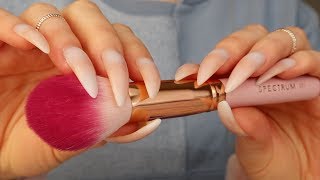 21 min
 FACE & CAMERA BRUSHING / TRACING GENTLE MIC SOUNDS NO-TALKING ASMR || SOME TAPPING LONG NAILS ASMR
![ASMR Brushing, Scratching, and Massage For Deep Sleep 💆🏻♀️ [No Talking No Midroll Ads]](https://i.ytimg.com/vi/EaZWSknPfZc/mqdefault.jpg) 10h 0m
10h 0m ASMR Brushing, Scratching, and Massage For Deep Sleep 💆🏻♀️ [No Talking No Midroll Ads]
 1h 17m
 ASMR Soft Brushing, Scalp Scratching, Gentle Back Massage for Deep Sleep and Tingles (No Talking)
 1h 19m
 ASMR Extremely Sleepy & Tingly Best Triggers Ever 나도 모르게 스르르 깊은 잠에 빠지는 ASMR
 15 min
 ASMR Twin Ear Cleaning - Gloves, Dropper, Picking, Cotton Swabs, Brushing
 20 min
 Testing your ASMR endurance
 24 min
 ASMR Getting All Up In Your Ears (mic brushing & scratching, comforting words)
 15 min
 ASMR | Body Brushing and Intense Shirt Scratching
![[ASMR] *Improved Audio* Head to Toe Physical Assessment on @ediyasmr | Real Person Medical Roleplay](https://i.ytimg.com/vi/f-W4n1J6R40/mqdefault.jpg) 1h 14m
1h 14m [ASMR] *Improved Audio* Head to Toe Physical Assessment on @ediyasmr | Real Person Medical Roleplay
 2h 0m
2h 0m ASMR The Most Realistic Barber Shop Ever!
![[ASMR] For People Who Need Deep Sleep](https://i.ytimg.com/vi/vLuOUmZi8t4/mqdefault.jpg) 26 min
26 min [ASMR] For People Who Need Deep Sleep
 22 min
 Overrated triggers VS Underrated triggers ASMR
 34 min
 Vault-Approved Hair Adjustment | Fallout ASMR
![[ASMR] Brushing Your Face & Slow, Close Breathing [Visual]](https://i.ytimg.com/vi/e09_bdokd8s/mqdefault.jpg) 15 min
15 min [ASMR] Brushing Your Face & Slow, Close Breathing [Visual]
![[ASMR] 音良すぎ!鼓膜震えるゾクゾク音質、囁き耳かき、綿棒タッピング。癒しの深い眠りへ。 Tingling Triggers To Help You Sleep【睡眠導入/KU100】](https://i.ytimg.com/vi/ZWfTWuH5fnk/mqdefault.jpg) 59 min
59 min [ASMR] 音良すぎ!鼓膜震えるゾクゾク音質、囁き耳かき、綿棒タッピング。癒しの深い眠りへ。 Tingling Triggers To Help You Sleep【睡眠導入/KU100】
 56 min
 ASMR Sensitive Fluffy Triggers & Mic Brushing for Sleep 💤 Face Brushing + Hand Movement (No Talking)
 16 min
 ASMR Sensory exam 𓆰 Let's test your sensitivity
 1h 28m
 Click This If You Can't Sleep ASMR (ear cleaning)
 2h 9m
2h 9m ASMR Camera Brushing & Blowing, Breathing, Shh~ for Deep Sleep | 2 Hours | Tascam (No Talking)
 29 min
 ASMR Inner Ear Cleaning For SLEEP & TINGLES
 23 min
 ASMR- Relaxing you! Brushing Away Stress and Positive Affirmations 💙💙💙(surfshark vpn)
 32 min
 ASMR | Best Friend Scratches Your Back After A Stressful Day | Back Brushing & Tapping
![[ASMR] マイクをブラッシング Brushing the Microphone [囁き声-Whisper]](https://i.ytimg.com/vi/nKjz95M-twU/mqdefault.jpg) 30 min
30 min [ASMR] マイクをブラッシング Brushing the Microphone [囁き声-Whisper]
 2h 16m
 ASMR | 2 Hrs To Cure Insomnia & Give You Insane Tingles
 28 min
 ASMR INTENSE Visuals To Make You Very Sleepy
![[ASMR] Sounds To Make You Sleep 😴 (Mic Brushing, Mic Scratching & Finger Fluttering)](https://i.ytimg.com/vi/5wi2PM65PYQ/mqdefault.jpg) 18 min
18 min [ASMR] Sounds To Make You Sleep 😴 (Mic Brushing, Mic Scratching & Finger Fluttering)
 12 min
 ASMR THAI 🇹🇭 ภาษาไทย 🇹🇭 (Mic-brushing, inaudible, unintelligible)
 39 min
 ASMR | 경력 30년 세신마스터에게 세신과 마사지를 받으며 힐링하기 | 세신샵 밀다 화곡본점 | 🎉구독자 할인 이벤트🎉
 1h 2m
1h 2m ASMR Humming lullabies & Camera Brushing | Layered Sound Mic Touching, Tapping | Soft Singing 1 Hour
 28 min
 ASMR Girl In Class Plays With Your Hair ✏️✨(clipping, bedazzling, braiding, brushing)
 14 min
 EXTREMELY Tingly TWIN Ear Cleaning ASMR - Brushing, Picking, Bottle ...
 16 min
 Cleaning the Inside of Your Screen | ASMR
 26 min
 ASMR | Trigger Words & Brushing Your Face (repeating "just a little bit, okay, good, I love you"...)
Related triggers
Use brushing ASMR for
Where to buy
| Item | Why it fits | ||
|---|---|---|---|
| Wired over-ear headphones | Wired two-channel sound for binaural recordings, no Bluetooth lag. | See on Amazon | |
| Headband sleep headphones | Flat speakers in a soft headband, made for wearing in bed. | See on Amazon |
As an Amazon Associate, ASMR Registry earns from qualifying purchases. Links open Amazon search results. We have not tested these products.
Frequently asked questions
What is ASMR brushing and why does it feel so good?
It means using soft bristles on a microphone, hair, face or other surface while recording the sound up close. It may feel good because brushing is tied to grooming and care. That calm response comes with tingles for some people and relaxation only for others.
What type of brush is used in ASMR videos?
Soft makeup brushes such as kabuki, fan and powder give the gentlest sound. Paddle hairbrushes give the classic sweep, and mic brushing uses whatever brush fits the windscreen. Boar bristle and paintbrushes are stiffer and more textured.
Is hair brushing ASMR good for sleep?
Many people find it one of the more sleep-friendly triggers because the strokes are slow, rhythmic and predictable. Choose a long, no-talking video so the end does not wake you.
What is the difference between hair brushing ASMR and scalp brushing ASMR?
Hair brushing is the soft swoosh of bristles moving through strands. Scalp brushing has the brush on skin, so it has more texture and drag. Hair brushing is airier and more background-friendly; scalp brushing feels more present.
Why does microphone brushing feel so tingly?
The close recording picks up fine detail, such as individual bristles dragging across foam, that you would not normally hear. It feels as though something is happening beside your ear. That closeness is why many people find it effective.
Does ASMR brushing work if you don't get tingles?
Yes. Many people use ASMR to relax without ever feeling tingles. If you are not getting them, try slower videos or a softer or stiffer brush, instead of giving up on the trigger.
- Choose mic brushing or a soft kabuki brush with no talking for sleep, and a long video so the sound carries you through without ending abruptly.
- Search for long brushing ASMR no talking to skip chatty videos and reach the content designed for winding down.
- If a brush stops working, switch to a different brush type partway through a session, such as moving from a soft powder brush to a stiffer one.
- Pick creators who pause between strokes, because the gap builds anticipation while nonstop brushing flattens into background noise.
- Close your eyes after the first minute and listen, since watching can keep your mind more active than you want at bedtime.