 8 min
8 min ASMR Hair Play
Try hair play ASMR if tapping and whispering do little for you. Brushing, combing and finger work feel like being groomed, which suits sleep and winding down. Skip it, or start with fingers and a comb, if sharp brush sounds feel busy or irritating.
Pick a tool
- Boar bristle brush: a dry, layered crackle that many people mean by "hair brushing sound." Strokes tend to be short and the pace can climb, which some find agitating.
- Wide-tooth comb: quieter and slower, with individual clicks. Pick it if brush sounds feel too sharp or busy.
- Bare fingers: nearly silent. This is a visual and personal attention trigger. It suits visual responders; if you watch with your eyes closed, it is not worth it.
- Paddle and detangling brushes: thin, plasticky sounds that are rare in good videos.
- Wire scalp scratchers: bright, metallic and polarizing. Many people find them unbearable through headphones.
Pick the sound that fits your goal
- Sleep: slow, consistent brushing, finger combing or scalp massage, with no sudden tempo changes. Very slow strokes with pauses are meditative. Faster brushing suits focus.
- Tingles: scalp scratching works for many people when brushing does not. Search for scalp scratching ASMR.
- Visual responders: look for scalp massage or slow hair sectioning with no talking.
Hair length and texture change the sound
Long hair gives long, sweeping strokes, which feel more relaxing. Short hair gives shorter, more frequent sounds that can feel busy. Curly and coily hair gives more crackle, longer pauses and product sounds. Many people who never liked standard brushing respond to curly hair sectioning, and it is worth searching for. Very fine hair records thinly.
What to try first
Use headphones. Hair play is recorded binaural, with microphones placed like ears, and speakers collapse that sense of someone behind you. In-ear buds are practical for sleep, and flat sleep buds suit side sleepers. Keep the volume barely above quiet.
Give a video enough time without checking whether it works. Many long videos open with brushing and move to scalp work later, which is a calming order that suits sleep.
If you feel nothing
- Check that you are using headphones.
- Watch longer without evaluating it.
- If you are a visual responder, try slow finger sectioning with no talking.
- Many long-term viewers get calm but no tingles and use it for sleep.
- If you have gone numb to ASMR, take a short break and come back.
Why video can beat real life
Some people love hair play videos but feel little when a partner does it. In a video, a stranger gives one-way attention and you owe nothing back. In person, part of your mind may keep tracking the other person. Real hair play works best when nobody talks and it lasts long enough that you stop tracking it, which is why hairdressers and shampoo bowls often work.
Booking a real session
You are more likely to find a scalp treatment, head spa or long shampoo at a salon than a dedicated ASMR spa. Ask for an extended shampoo and brushing segment and say you do not want conversation. Call a couple of salons to compare prices.
What the research says
No study has tested hair play specifically; the advice above is common practice, not tested results.
Best hair play ASMR videos
8 min ![[ASMR] Sleep Recovery ~ 3 Hours of Hair Treatments](https://i.ytimg.com/vi/t594X_5KKMo/mqdefault.jpg) 3h 7m
3h 7m [ASMR] Sleep Recovery ~ 3 Hours of Hair Treatments
 14 min
 ASMR HOT CHEETOS MOZZARELLA CORN DOGS with STEPHANIE SOO
 0 min
0 min Satisfying Hair Brushing ASMR for Sleep 🌙✨
 10 min
 ASMR HOT CHEETOS CHEESEBURGERS with BENNY BLANCO
![[ASMR] Sleep Time ~ 3 Hours of Hair Treatments](https://i.ytimg.com/vi/jyhi1aGBVMA/mqdefault.jpg) 3h 0m
3h 0m [ASMR] Sleep Time ~ 3 Hours of Hair Treatments
 10 min
 ASMR with Friends
 16 min
 MOST POPULAR FOOD FOR ASMR + ALFREDO SAUCE (MOZZARELLA CORN DOG, NUGGETS, ONION RINGS, HASH BROWNS)
 30 min
 ASMR 가장 전문적인 두피 관리 The Best Hair Scalp Treatment
 33 min
 ASMR | BACK & HAIR Play, Trace, Scratch, Brush + OIL MASSAGE
 9 min
9 min 100 SHRIMP COCKTAILS IN 8 MINUTES
 1h 7m
1h 7m ASMR Realistic! 10 Scalp Massage & Hair Brushing 😚 (No Talking)
 22 min
 ☺ Relaxing Hair Brushing & Scalp Massage Sounds Stress Relief - Whisper 3D Binaural ASMR Ear to Ear☺
 22 min
 ASMR Relaxing Scalp Massage ♥
 0 min
0 min DRY SCALP!! Dandruff Scratching ASMR #dandruffscratching #dandrufftv #satisfying #dandruffremoval
 43 min
 ASMR Hair Brushing & Scalp Massage (For Sleep)
 0 min
0 min ASMR: Scalp Treatment Massage for Hair Growth and Sensitive Scalp! #shorts
 3h 23m
 3-HOUR ASMR Insomnia Treatment - Hair Play & Brushing Sounds (No Talking)
 1h 28m
 ASMR Friend Pampers You Before Bed (Layered Makeup, Scalp Massage, & Skincare)
 0 min
0 min Asmr scalp scratching #asmr #asmrscalpscratching #asmrscalptreatment #asmrdandruff @ivybasmr
 0 min
0 min ASMR Itchy scalp and head acne? Stress-relieving scalp treatment
 50 min
 ASMR Realistic Hair Brushing & Scalp Massage on Real Head💆👩
 1 min
1 min asmr scalp #asmr #asmrvideos #sleep #satisfying #tingles #relaxing #relax #oddlysatisfying #hair
 0 min
0 min ASMR
 14 min
 ASMR MOST POPULAR FOOD at JOLLIBEE (Spicy Fried Chicken, Yumburger, Spaghetti, Chicken Sandwich)
![친구가 해 주는 피부관리 ASMR [꿀꿀선아]skin care,scalp massage,suna asmr](https://i.ytimg.com/vi/57oY6EEkvaM/mqdefault.jpg) 38 min
38 min 친구가 해 주는 피부관리 ASMR [꿀꿀선아]skin care,scalp massage,suna asmr
 36 min
 Relaxing Hair Brushing, Scalp Massage, Oils & Hair Play ASMR/Trinaural
 1h 17m
 ASMR Friend Pampers You For Sleep 🧡 Tingly Makeup, Skincare, Scalp Massage (Layered Sounds)
 31 min
 ASMR INTENSE RELAXATION_ Hair wash, Flaxseed GEL, Scalp Inspection, Massage
 0 min
0 min Asmr scalp test #asmr #asmrvideos #satisfying #relax #relaxing #tingles #sleep #oddlysatisfying
 0 min
0 min ASMR Tingly Scalp Check Natural Sleep Aid Therapy ~ Medical Exam Soft Spoken Roleplay
 29 min
 ASMR | The Most Ticklish Nose Cleaning Ever | Ear Cleaning | Scalp Massage | Piercing Cleaning
 38 min
 ASMR Ultimate Head and Scalp Massage Role Play: Realistic Binaural Sounds For Relaxation
 38 min
 Super comfortable scalp care
 16 min
 MOST POPULAR FOOD FOR ASMR with CHEETOS (KFC, ONION RINGS, MOZZARELLA CORN DOG, CHICKEN NUGGETS)
 0 min
0 min Treating Your Scalp for Hairloss 🫧💆♀️ #asmr
 1 min
1 min ASMR scalp massage on my super ticklish friend #relax
 22 min
 ASMR | Scalp Inspection (TINGLY FRIDAY)
 2h 3m
2h 3m ASMR | 2HRs Intense Nitpicking & Deep Scalp Scratching Triggers - ALLZOOMED
 31 min
 ASMR Professional Korean Scalp Treatment | Sleep-inducing Scissor Cut
![[ASMR] Hair Care with Wooden brushes and Scalp Serum | No Talking](https://i.ytimg.com/vi/K4UsiaKPruA/mqdefault.jpg) 31 min
31 min [ASMR] Hair Care with Wooden brushes and Scalp Serum | No Talking
 12 min
 ASMR GREEN FOOD JELLY NOODLES & EDIBLE SPOONS & MACARONS & ROCK CANDY & GREEN ROLL CAKE & CREPE CAKE
 12 min
 ASMR- Hair Play ft. My Sister! (Brushing, Scalp Massage, Straightening)
 26 min
 ASMR ~ Relaxing Hair Brushing ~ 100+ Strokes To Help You Sleep
 12 min
 ASMR RED FOOD VS BLUE FOOD, GIANT GUMMY WORM, NERDS ROPE, PLANET GUMMY, ROCK CANDY, GUMMY BALLS 먹방
 48 min
 ASMR Korean Scalp Treatment & Full-Body Care | The Best Stress Relief Method
 0 min
0 min ASMR Intense Scalp Scratching & Massage for Deep Tingles
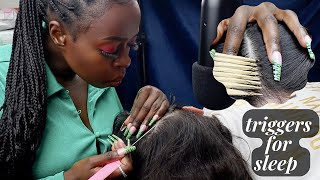 41 min
 ASMR Super Tingly Triggers FOR SLEEP | scalp scratching flakes
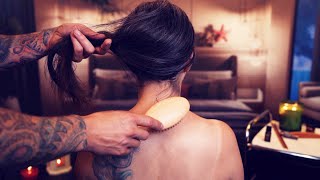 34 min
 ASMR | Hair Brushing, Scalp and Shoulder Massage for Relaxation and Sleep | No Talking Real Person
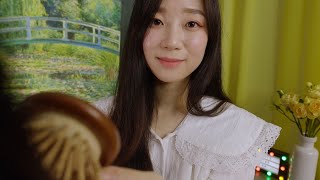 38 min
 Soothing Hair Brushing & Scalp Massage💛 ASMR
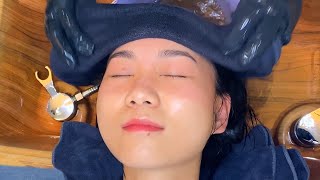 19 min
 ASMR 머리숱이 풍성해지는 헤어스파 Hair wash, Scalp Massage
 40 min
 Hair brushing and Hair Clips to Help you Sleep 🕊️ ASMR Whisper
 0 min
0 min Scalp Treatment sends me to heaven #asmr #relax #scrub #massage #barbershop
 1 min
1 min ASMR Scalp Treatment
 0 min
0 min ASMR Scalp Treatment Sleep Medicine | Soft Spoken
 0 min
0 min Soul Touch Therapy | Scalp & Back Massage ASMR
 34 min
 ASMR Scalp Check & Treatment - (Sensitivity Scalp Tests, Sharp or Dull) Real Person Medical Exam
 5 min
5 min *ASMR* 50 TRIGGERS IN 5 MINUTES
 1h 10m
 ASMR Hair Brushing & Scalp Attention for Deep Sleep (No Talking)
 22 min
 ASMR The best triggers for you 👐 Testing your asmr
 21 min
 Real Person Hair Play Triggers, Scratching & Tracing on an ASMRtist! ~ ASMR Personal Attention
 20 min
 ASMR Female Sleep Therapy In Barber Shop (asmr for sleep)
 42 min
 ASMR Weird Girl is Obsessed With You (hair play, personal questions)
 3h 1m
3h 1m The Ultimate ASMR Scalp Check with Sticks Compilation | 3 Hours Featuring @ediyasmr,@emvyASMR
 32 min
 ASMR | Relaxing Scalp Check + Treatments (Personal Attention, Scalp Scratching, Hair Play)
 43 min
 Ultimate Real Person ASMR Session 🌙 Ear Attention, Hair Play, Gentle Touch
 37 min
 ASMR Hair Play During The Asmr Massage | + ASMR MALE FOOT MASSAGE
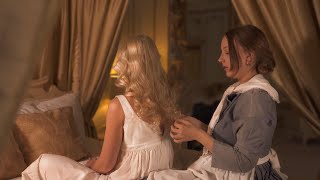 27 min
 ASMR 🌸 Bridgerton Inspired Hair Play, Braiding, Brushing, Massage & Back Tracing to Sleep | Ep 1
 35 min
 Melting Intense Back Tension – Deep Tissue ASMR for Sleep
 2h 36m
 ASMR - 2.5 Hrs Tingly Relaxing Scalp Check & Treatment
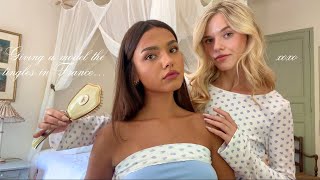 23 min
 ASMR With My Model Friend In France ♡ Gentle Hair Play, Head Massage, Guided Relaxation ⋆˙⟡
![ASMR[NoTalking]자기 전 메이크업 지우는 소리와 머리 빗는 소리 | Removing your makeup before bed | Relaxing hair brushing](https://i.ytimg.com/vi/ljYcjnDkWoA/mqdefault.jpg) 31 min
31 min ASMR[NoTalking]자기 전 메이크업 지우는 소리와 머리 빗는 소리 | Removing your makeup before bed | Relaxing hair brushing
 27 min
 ASMR Relaxing Back Tracing, Hair Play, Oil massage 친구에게 팅글마사지 해주기
![(ENG SUB)[Japanese ASMR] Scalp Massage, Hair Brushing / Whispering](https://i.ytimg.com/vi/1-YBShyrguU/mqdefault.jpg) 44 min
44 min (ENG SUB)[Japanese ASMR] Scalp Massage, Hair Brushing / Whispering
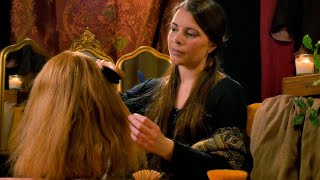 35 min
 Cozy Hair Brushing | ASMR (detangling, brushing, hair play, soft spoken + whispered)
 12 min
 ASMR MOST POPULAR FOOD at JACK IN THE BOX (Cheeseburger, Onion Rings, Spicy Chicken Sandwich, Fries)
 14 min
 sister tries ASMR for the first time (hair brushing, braiding, & scratching)
 10 min
 ASMR MOST POPULAR FOOD at WENDY'S (Double Cheeseburger, Nuggets, Spicy Chicken Sandwich, Fries)
 1h 0m
1h 0m ASMR Scalp Check with @ediyasmr + Chinese Acupoint Massage | Real Person, Point Therapy
 36 min
 ASMR(Sub✔)리얼한 두피 마사지와 헤어 브러싱 수면 케어 해드릴게요 / Sleep care with realistic scalp massage and hair brushing
 40 min
 ASMR Barbershop Roleplay
 10 min
 ORBEEZ STRESS BALL | ASMR sounds no talk
 21 min
 ASMR| Relaxing Hair Play, Brushing, Hairstyling On A Real Person! (with my sister)
 31 min
 The Most Comforting ASMR ~ Scalp Kisses, Affirmations & Gentle Hairplay
 23 min
 ASMR⁴ Quadruple Trigger Intensity to Make YOU Tingle Like Never Before
 27 min
 ASMR | Hair Brushing/ Combing & Scalp Scratching with Extra Long Nails (layered sounds)
 19 min
 🌛ASMR🌛🌛Falling asleep in my embrace: scalp and ear's massage, blowing into ears
 27 min
 ASMR / Hair Play, Scalp Massage, & Hair Brushing + Clipping
 11 min
 ASMR RED JELLY ORBS & ROCK CANDY & DICE GUMMY & JELLY NOODLE, PEEPS MARSHMALLOWS & RED SPRINKLES
 27 min
 ASMR Lice Check 🔎 (plucking, scalp scratching, & lice comb)
 31 min
 ASMR - Gentle Scalp Massage!! (whispering, soft-spoken, layered, hair, scratching, brushing)
 27 min
 Ultra Relaxing Scalp Massage for Stress & Sleep, Hair Sounds & Brushing, What is ASMR? Soft Spoken
![[ASMR] Scalp Massage, Hair Brushing / No Talking 頭皮マッサージ、髪を梳かす](https://i.ytimg.com/vi/N5a-k1uRekc/mqdefault.jpg) 31 min
31 min [ASMR] Scalp Massage, Hair Brushing / No Talking 頭皮マッサージ、髪を梳かす
 47 min
 ASMR(Sub✔)시원한 두피마사지샵으로 오세요 Relaxing Scalp Massage RP
 8 min
8 min ASMR | Girl who is OBSESSED with you eats your lice 😋 (lice check, hair play)
 32 min
 ASMR Heavenly Scalp Massage w/ Gentle Whispers 💆 Perfect Headache Relief ~
 38 min
 ASMR(Sub✔)리얼한 두피 마사지와 헤어 브러싱 Scalp Recovery and Treatment
 39 min
 ASMR Skin Clinic Appointment | Scalp Inspection, Crinkle Coat
 22 min
 ASMR LOVING BITCHY BIG SISTER BABYSITS YOU (Hair Brushing, Face Brushing, Makeup On Both Of You)
 40 min
 ASMR Running Tests on You (Nonsensical)
Related triggers
Use hair play ASMR for
Where to buy
| Item | Why it fits | ||
|---|---|---|---|
| Wired over-ear headphones | Wired two-channel sound for binaural recordings, no Bluetooth lag. | See on Amazon | |
| Headband sleep headphones | Flat speakers in a soft headband, made for wearing in bed. | See on Amazon | |
| Small Bluetooth speakers for the nightstand | Plays sound into the room, so nothing presses on your ears. | See on Amazon |
As an Amazon Associate, ASMR Registry earns from qualifying purchases. Links open Amazon search results. We have not tested these products.
Frequently asked questions
What is hair play ASMR?
It is audio and video of someone brushing, combing, sectioning or gently touching hair near a microphone. For some people the close, soft sound feels like being groomed and is very calming.
Does hair play ASMR help with sleep?
Many people use it that way. Slow, repeating sounds give the mind something low-stakes to follow. Choose a long video with steady pacing and no sudden tempo changes, at low volume in a dark room.
What scalp and hair sounds create the strongest ASMR tingles?
It varies. Scalp scratching works for many people when brushing does not, and boar bristle brushes give a dry layered crackle. Combs are slower and quieter, and fingers are mostly a visual trigger. Try each.
Why does hair brushing rank so consistently high in ASMR trigger preference?
Nobody has proved why. One idea is that it feels like being groomed, which suggests care and safety. The soft, irregular sound is also hard to predict. If light touch in real life makes you sleepy, it may suit you.
What makes hair play ASMR feel personal and immersive versus clinical?
Steady pacing, a close binaural microphone and no sudden loud sounds. Uneven volume, interruptions and thin, distant audio break the feeling. You want it to seem right beside your ear.
How does in-ear audio change the experience of hair brushing and scalp-touching ASMR?
It keeps the left and right separation, so the brush seems to travel across your head. Over-ear headphones give the widest space but are hard to sleep in. In-ear buds keep the separation and suit sleep. Speakers lose it.
- Use headphones for hair play, because the recording is binaural and speakers collapse the sense of someone moving around your head.
- If brushing is not working tonight, search for scalp scratching or finger sectioning, which suit different kinds of responders.
- Keep the volume barely above quiet for sleep, since hair sounds that are clearly audible at arm length are too loud.
- Watch for several minutes without checking whether it is working, because the response often needs time and evaluating it gets in the way.
- If you are a visual responder, pick slow finger sectioning or scalp massage with no talking instead of brush-heavy videos.